360 Garage

Tyre Fitting, Repair and Assessment

Tyres are the only part of the car in contact with the road, and getting the right tyre, correctly fitted, balanced and matched, affects safety, handling and how evenly the set wears. We assess each tyre honestly, including when a puncture repair is not appropriate and replacement is the safer option.

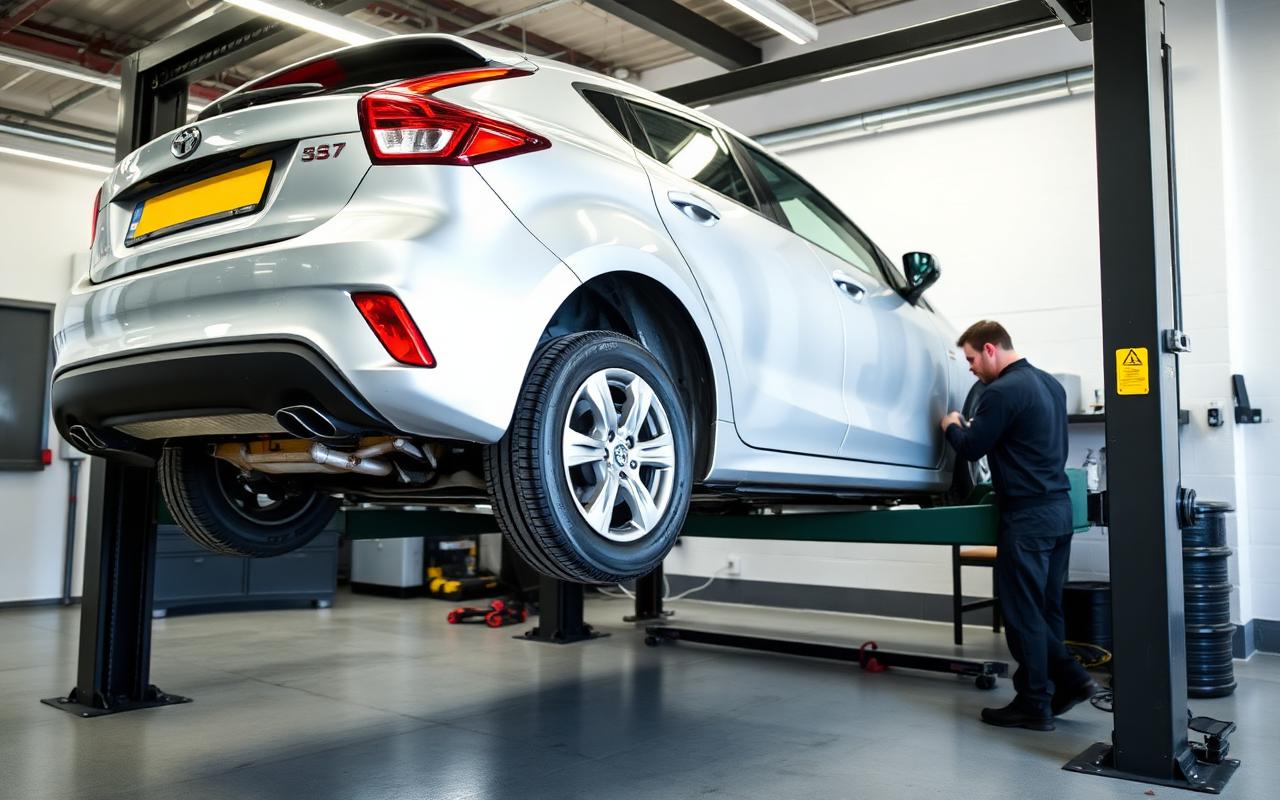
Technician inspecting tyre tread depth and condition with a gauge

About this service

A tyre's tread pattern is designed to channel water away from the contact patch and maintain grip in wet conditions. As tread wears down, that ability to disperse water reduces, increasing the risk of aquaplaning. UK law requires a minimum tread depth of 1.6mm across the central three-quarters of the tyre's width around its entire circumference. However, from a genuine safety perspective, performance in wet conditions noticeably declines well before tread reaches the legal minimum. This is why we always recommend considering replacement earlier than the legal cut-off.

The sidewall of a tyre carries information that matters beyond the brand name. The tyre size, load rating and speed rating are all specified by the vehicle manufacturer for good reason, since they relate directly to how much weight the tyre is designed to carry safely and at what maximum speed. Fitting a tyre with a lower load or speed rating than specified can compromise safety, particularly under load or at speed. We always check the correct rating for a vehicle before fitting, rather than assuming a size match alone is sufficient.

Tyre pressure is one of the simplest things to check and one of the most commonly neglected. Under-inflated tyres wear unevenly across the tread, generate excess heat that increases the risk of failure, and increase fuel consumption. Over-inflated tyres, meanwhile, reduce the size of the contact patch and can make the ride harsher and reduce grip. Correct pressure is specific to the vehicle and its load, not a generic figure, and is checked as standard whenever a vehicle comes in for tyre work.

When a puncture occurs, not every tyre can be safely repaired. A puncture in the central tread area, of a limited size and within the tyre's usable tread life, can often be repaired properly using an internal patch-plug combination rather than an external plug alone. A puncture in the sidewall, a puncture affecting the tyre's structural integrity, or a tyre that has been run flat and suffered internal damage cannot be safely repaired. We assess each case individually rather than defaulting to either repair or replacement automatically.

When customers come to us

Low or uneven tread depth
Tread approaching the legal minimum, or wearing unevenly across the tyre, needs assessment to establish safe remaining life and any underlying cause.
Puncture from road debris or a nail
A puncture needs individual assessment to determine whether a safe repair is possible or whether the location and severity mean replacement is the right call.
Vibration at speed
Vibration felt through the steering wheel or seat at speed is often caused by an imbalance in the wheel and tyre assembly, correctable through balancing.
Persistent slow puncture
A tyre that repeatedly loses pressure slowly may have a small puncture, a valve fault, or a wheel seating issue, and needs assessment rather than repeated reinflation alone.
Sidewall damage or bulging
A bulge or visible damage to the sidewall indicates internal structural damage and is a safety concern requiring immediate assessment, not a repairable fault.
Uneven wear across the tread
Wear concentrated on one edge, in the centre, or in a patchy pattern points toward specific causes such as pressure, alignment or suspension issues that should be identified.

What the work includes

  • Tread depth measurement across the full width and circumference of each tyre
  • Sidewall inspection for damage, cracking or bulging
  • Tyre pressure check and correction to the vehicle-specific figure
  • Puncture assessment and, where safe, professional puncture repair
  • New tyre supply and fitting matched to correct size, load and speed rating
  • Wheel balancing on fitting or removal of any tyre
  • Uneven wear pattern diagnosis linking symptoms to underlying causes
  • Manufacture date checking as part of tyre age assessment
  • Valve replacement where fitted as part of a tyre change
  • Guidance on matching tyres appropriately across an axle or full set
  • EV-specific tyre advice accounting for additional weight and torque
  • Honest advice where a repair is not a safe option

How it works

The 360 process for tyres

  1. 01

    Visual and measured inspection

    Each tyre is checked for tread depth, sidewall condition, uneven wear and manufacture date before any recommendation is made.

  2. 02

    Pressure check

    Pressures are checked and corrected to the vehicle-specific figure, since correct pressure affects both safety and even tyre wear.

  3. 03

    Puncture or damage assessment

    Where a puncture or damage is present, we assess its size, location and depth to establish honestly whether a safe repair is possible.

  4. 04

    Repair or replacement

    A safe puncture is repaired using a proper internal patch-plug method, or the tyre is replaced with one matched correctly for size, load and speed rating if repair is not appropriate.

  5. 05

    Balancing

    The wheel and tyre assembly is balanced on a wheel balancer to prevent vibration at speed.

  6. 06

    Final check and advice

    We confirm correct pressures and torque, and explain any wear pattern findings that suggest a separate underlying issue worth investigating.

Capability

Reading a tyre: tread, sidewall, ratings and age

Tread patterns are engineered with channels (grooves) that disperse water from beneath the tyre, reducing the risk of aquaplaning in wet weather. As tread wears, that channel depth reduces, and wet-weather grip and braking distance both worsen measurably before the legal minimum of 1.6mm is reached.

The sidewall carries a size code, a load index and a speed rating, all specified by the vehicle manufacturer to match the car's weight, performance and intended use. Fitting a tyre with a lower load or speed rating than specified is not simply a preference issue; it can genuinely compromise the tyre's ability to perform safely under the vehicle's actual demands.

Uneven wear tells a story. Wear across both outer edges typically suggests under-inflation, and wear concentrated in the centre suggests over-inflation. Wear on one edge only often points to an alignment fault, and patchy or scalloped wear can indicate worn suspension components such as dampers. Reading the wear pattern correctly avoids replacing a tyre without addressing the cause that will simply wear the replacement the same way.

Tyre age is coded into the sidewall as a four-digit date stamp showing the week and year of manufacture. Rubber compounds harden and lose flexibility over time regardless of tread depth or mileage. A tyre that looks visually fine but is significantly aged can have reduced grip and an increased risk of cracking. This is particularly relevant for spare tyres and low-mileage vehicles.

Electric vehicles add significant weight from the battery pack, and deliver high torque instantly from a standstill. Both of these factors increase tyre wear rates and put more demand on the tyre's structure than an equivalent combustion vehicle. EV-rated tyres are built to cope with this, typically with reinforced sidewalls and compounds suited to the extra load.

When a puncture cannot be safely repaired

Not every puncture can be repaired. Damage to the sidewall, a puncture outside the central tread area, damage from running the tyre while flat, or a tyre with tread already close to the legal minimum are all situations where a safe, lasting repair is not possible. We will recommend replacement rather than attempt a repair that would not hold safely.

Why 360

Why customers choose us for this work

Honest repair-or-replace assessment
We assess every puncture individually and will not carry out a repair where it would not be safe or lasting.
Correct load and speed rating checked
We confirm the manufacturer-specified load and speed rating for your vehicle before fitting any tyre, not just a matching size.
Wear pattern diagnosis included
We look at what caused uneven wear, not just the tyre itself, so the underlying issue can be addressed alongside replacement.
EV-aware tyre advice
We factor in the additional weight and torque demands of electric vehicles when advising on tyre choice and replacement.

Reading facility

Loverock Road, Reading

  • 360 Garage
  • 360 Alloys

Garage, MOT, diagnostics, mechanical repairs, performance and alloy-wheel refurbishment.

119 Unit 4 Loverock Road, Reading, RG30 1DZ
0118 394 3000

Monday – Friday: 9:00am – 6:00pm

Saturday: By appointment only

Sunday: By appointment only

Questions

Tyres — frequently asked

360 Garage

Book a Tyre Check

MOTs, servicing, diagnostics, repairs and performance upgrades.

Add photos if they help us understand the work. This is optional.

We’ll use these details only to respond to your enquiry and manage any work you ask us to complete. View our Privacy Policy.