360 Garage

Vehicle Diagnostics in Reading

Diagnostics is the process of finding the actual cause of a warning light or fault, rather than simply reading a stored code and guessing at a part. We carry out diagnostic work on all makes and models, including high-voltage EV and hybrid systems, at our Loverock Road workshop.

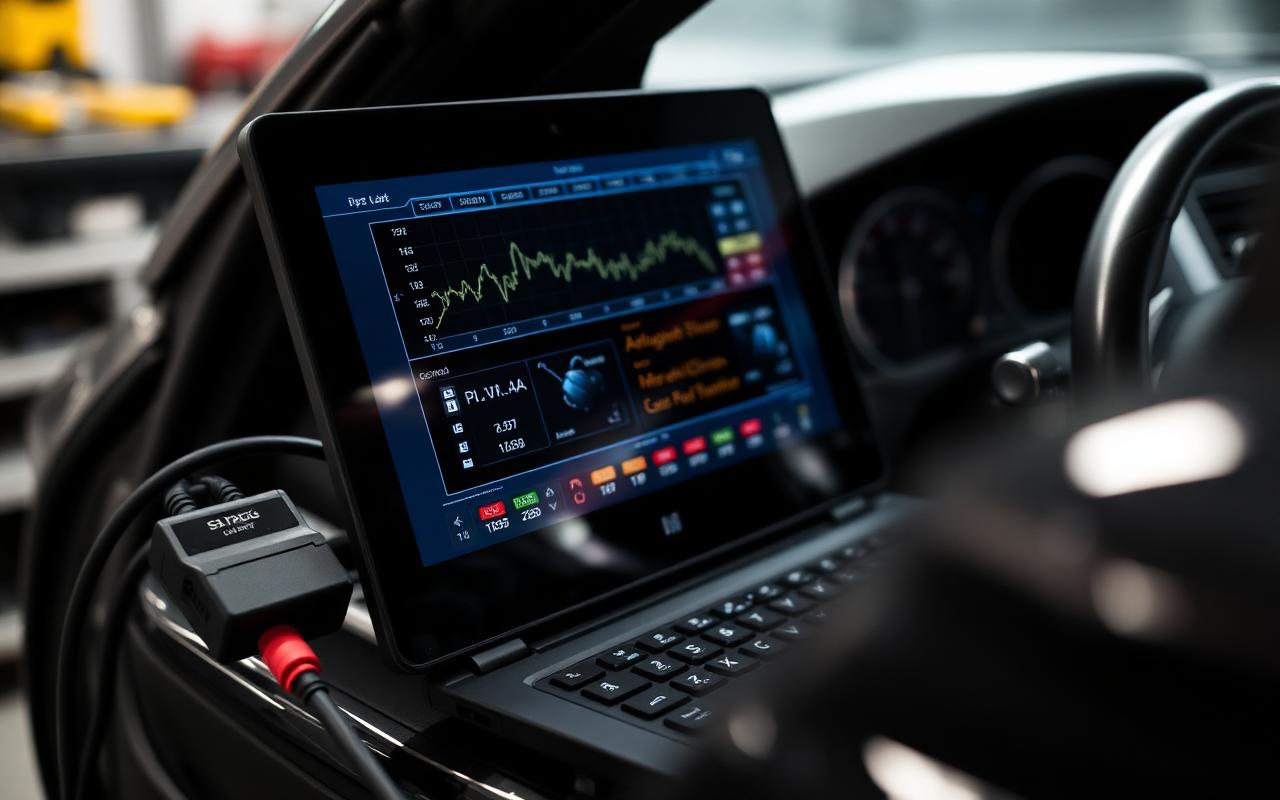
Technician connecting diagnostic equipment to a vehicle's onboard computer

About this service

There is an important difference between reading a fault code and actually diagnosing a fault. Any code reader can retrieve a stored trouble code from a vehicle's computer, but a code only points towards an area of the system. It does not confirm which specific component has failed, why it failed, or whether replacing the part the code suggests will actually resolve the underlying problem. Proper diagnosis uses the code as a starting point and then investigates further using live data, physical inspection and testing before any part is condemned.

Live data is real-time information streamed from the vehicle's sensors and control units while the engine is running or the vehicle is being driven. It shows values such as sensor readings, actuator responses and system behaviour as they actually occur, rather than a single stored snapshot. This allows a technician to see whether a component is behaving correctly under real conditions. It is often the only way to distinguish between a genuinely faulty part and one that is being blamed incorrectly because of a fault elsewhere in the system.

Intermittent faults come and go, or only appear under specific conditions such as when the engine is cold, when cornering, or after extended driving. They are among the hardest to diagnose because the vehicle may show no symptoms at all when it arrives at the workshop. In these cases, a road test under conditions similar to those that trigger the fault is often necessary. This is sometimes done alongside data logging equipment that captures information over a longer period, so an intermittent event can be caught and analysed after the fact.

We do not replace parts speculatively. Before any component is recommended for replacement, we aim to confirm through testing that it is actually the cause of the fault. Replacing an unaffected part not only adds unnecessary cost but can also mean the original fault remains unresolved. Where a fault genuinely requires further investigation — such as intermittent electrical faults that need to be caught in the act — we explain this honestly rather than guessing.

When customers come to us

Warning light on the dashboard
A warning light indicates that a fault has been detected somewhere in the relevant system. On its own, it does not tell you what is wrong or how serious it is — proper diagnosis is needed to establish that.
Intermittent fault that comes and goes
Faults that only appear occasionally are genuinely harder to catch, and may require a road test under specific conditions or data logging over a longer period to identify the cause.
Fault code read elsewhere, unclear what it means
A code read at a shop or with a home code reader points towards an area of the vehicle but is rarely the full answer. We investigate further with live data and testing before confirming a cause.
Part replaced previously but fault has returned
This sometimes happens where a part was replaced based on a code alone without confirming it was the actual cause. We start diagnosis from the current symptoms rather than assuming the previous work was correct or incorrect.
Reduced power or unusual running
Many vehicles enter a protective reduced-power mode when certain faults are detected, which can have several possible underlying causes requiring investigation.
EV or hybrid warning or performance issue
High-voltage systems require specific safety procedures and trained technicians; we have this capability in-house for EV and hybrid diagnostic work.

What the work includes

  • Fault code retrieval from the relevant control units
  • Live data analysis to observe real-time sensor and system behaviour
  • Physical inspection of wiring, connectors and related components
  • Road testing where a fault is condition-dependent or intermittent
  • Data logging for hard-to-catch intermittent faults where appropriate
  • High-voltage EV and hybrid diagnostic capability
  • Clear written explanation of findings before any repair is agreed
  • No speculative parts replacement without confirmed testing

How it works

The 360 process for diagnostics

  1. 01

    Initial discussion

    We ask when the fault occurs, under what conditions, and any warning lights or symptoms noticed, since this information helps focus the diagnostic process from the start.

  2. 02

    Code retrieval and initial checks

    Stored fault codes are read from the relevant systems and used as a starting point rather than a conclusion.

  3. 03

    Live data and physical inspection

    The technician examines live data and inspects related wiring and components to build a picture of what is actually happening rather than relying on the code alone.

  4. 04

    Road test where needed

    If the fault is condition-dependent, a road test is carried out to try to reproduce it under real driving conditions.

  5. 05

    Findings explained

    We explain what has been found, what is believed to be the cause, and what level of confidence we have, being honest where further investigation is genuinely needed.

  6. 06

    Repair recommendation and agreement

    A repair is only recommended once the cause is reasonably confirmed, and no work proceeds without discussing the findings and cost implications first.

Capability

Why reading a code is not the same as diagnosing a fault

A fault code is generated when a control unit detects a value or condition outside its expected range, and it identifies the circuit or system involved — not necessarily the specific failed component. For example, a code relating to a sensor circuit could be caused by the sensor itself, its wiring, or a connector. It could also be caused by a fault in a completely different part of the system that is affecting the sensor's readings indirectly.

Live data lets a technician watch how a system actually behaves while it is operating, comparing real-time values against what would be expected for a healthy system. This is often the only reliable way to confirm whether a component is genuinely faulty or is being incorrectly implicated by a fault elsewhere.

Intermittent faults present a particular challenge because the vehicle may show no fault at the point of inspection. A road test that replicates the conditions under which the fault occurs — cold start, sustained motorway driving, cornering, or specific temperatures — is often necessary. In some cases, data logging equipment is used to capture information over an extended period, so the fault can be analysed once it occurs, even away from the workshop.

EV and hybrid diagnostics involve additional layers, including battery management systems, high-voltage safety interlocks, inverters and electric drive units. These require specific training and safety procedures before any physical access. Diagnostic logic also differs meaningfully from a conventional combustion engine — a fault presenting similarly to a driver may have a completely different underlying cause in an EV.

  • A code identifies an affected circuit or area, not necessarily the failed part
  • Live data shows real-time behaviour, not just a stored snapshot
  • Intermittent faults may need a road test or extended data logging
  • EV/hybrid diagnostics require specific safety procedures and training

Honest limits of diagnostic work

Not every fault can be confirmed at the first visit, particularly genuinely intermittent faults that do not occur during the time the vehicle is with us. In these cases we will explain what further steps — such as an extended road test or data logging — are realistically needed rather than guessing at a repair. We do not offer a definitive diagnosis without appropriate testing having been carried out.

Why 360

Why customers choose us for this work

Testing before replacing
We confirm a fault through live data and physical testing before recommending a part is replaced, rather than acting on a code alone.
EV and hybrid capability
Our workshop has high-voltage EV and hybrid diagnostic capability, with technicians trained in the required safety procedures.
Road testing where needed
Condition-dependent and intermittent faults are investigated with a road test rather than dismissed if nothing shows on arrival.
All makes and models
We diagnose faults across a wide range of manufacturers, using appropriate diagnostic equipment for each.

Reading facility

Loverock Road, Reading

  • 360 Garage
  • 360 Alloys

Garage, MOT, diagnostics, mechanical repairs, performance and alloy-wheel refurbishment.

119 Unit 4 Loverock Road, Reading, RG30 1DZ
0118 394 3000

Monday – Friday: 9:00am – 6:00pm

Saturday: By appointment only

Sunday: By appointment only

Questions

Diagnostics — frequently asked

360 Garage

Book a Diagnostic Check

MOTs, servicing, diagnostics, repairs and performance upgrades.

Add photos if they help us understand the work. This is optional.

We’ll use these details only to respond to your enquiry and manage any work you ask us to complete. View our Privacy Policy.