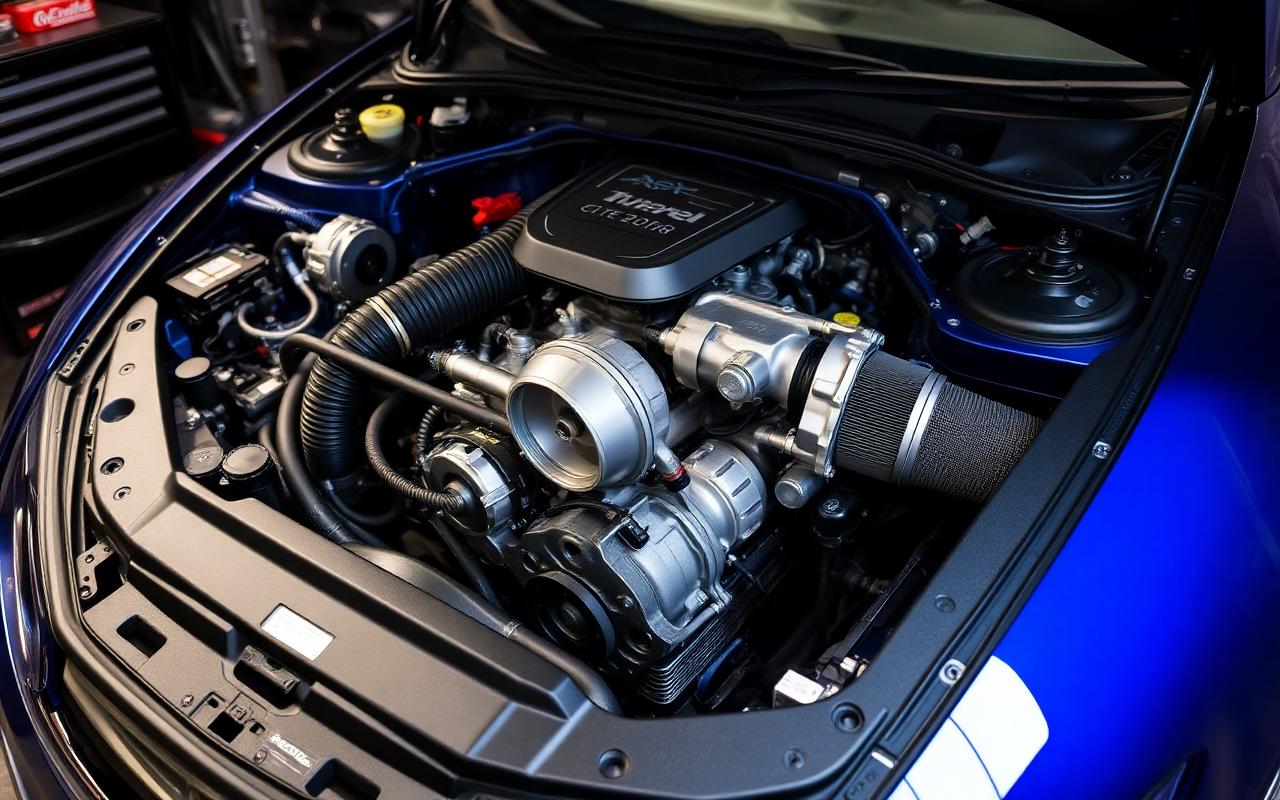
Performance modification covers a wide range of work, from a straightforward ECU remap through to a fully built engine, and the right starting point for any of it is an honest assessment of the vehicle's current mechanical condition, not the modification itself. A car with worn engine mounts, ageing timing components, or a marginal cooling system is a poor candidate for extra power until those underlying issues are addressed, because performance work places more demand on every system connected to the engine, not less.
ECU remapping is carried out entirely in-house at 360 Garage. Remapping adjusts the software controlling fuel delivery, ignition timing, boost pressure and other parameters within the engine control unit, and a well-executed remap on a suitable vehicle can improve power delivery and responsiveness. We assess each vehicle's suitability individually, considering its mechanical condition, mileage, service history and the specific engine and turbocharger or supercharger combination, before recommending a remap. It is important to be transparent that we do not have an on-site rolling road dyno; where dyno testing or verification is wanted, this can be arranged through suitable external facilities, and we do not promise specific power or torque figures, since real-world results vary by vehicle, condition and the specific tune applied.
Any performance modification, remapping included, has legal and insurance implications that we discuss openly with every customer. Modifying a vehicle's performance characteristics is something an insurer needs to be told about, and failing to declare a genuine modification can affect the validity of a policy in the event of a claim. Similarly, modifications must keep the vehicle road legal, meeting emissions, noise and construction and use requirements, and we will not carry out or recommend work that would make a vehicle illegal to use on the road.
Intake and exhaust modifications work by reducing restriction in the air entering and leaving the engine, which can support power gains, particularly when paired with a remap, but the benefit depends heavily on what else is fitted and how the engine management is set up to use the extra airflow. Turbocharger and supercharger work ranges from upgrading an existing unit to fitting a larger unit entirely, and always needs to be considered alongside supporting components such as fuelling, cooling and, in higher-power builds, the strength of internal engine components.
When customers come to us
- Wanting more power from a standard vehicle
- We start with a suitability assessment of the vehicle's mechanical condition before discussing what remapping or other upgrades might genuinely be appropriate.
- Unsure whether a remap suits their specific car
- Suitability depends on mileage, service history, mechanical condition and the specific engine and turbo or supercharger setup, and needs individual assessment rather than a blanket answer.
- Planning a staged build for track or spirited road use
- We help plan supporting modifications, such as cooling, fuelling and suspension, so that a build works reliably together rather than chasing a single upgrade in isolation.
- Concerned about insurance implications of modifying
- We discuss openly that performance modifications generally need to be declared to an insurer, and that undeclared modifications can affect a policy's validity.
- Wanting improved braking to match increased performance
- Increased power and speed capability increase the demand on the braking system, and brake upgrades are assessed alongside any performance work for this reason.
- Existing modifications causing reliability issues
- Modifications fitted without adequate supporting changes, such as a remap without appropriate cooling or fuelling, can cause reliability problems that we assess and can help resolve.