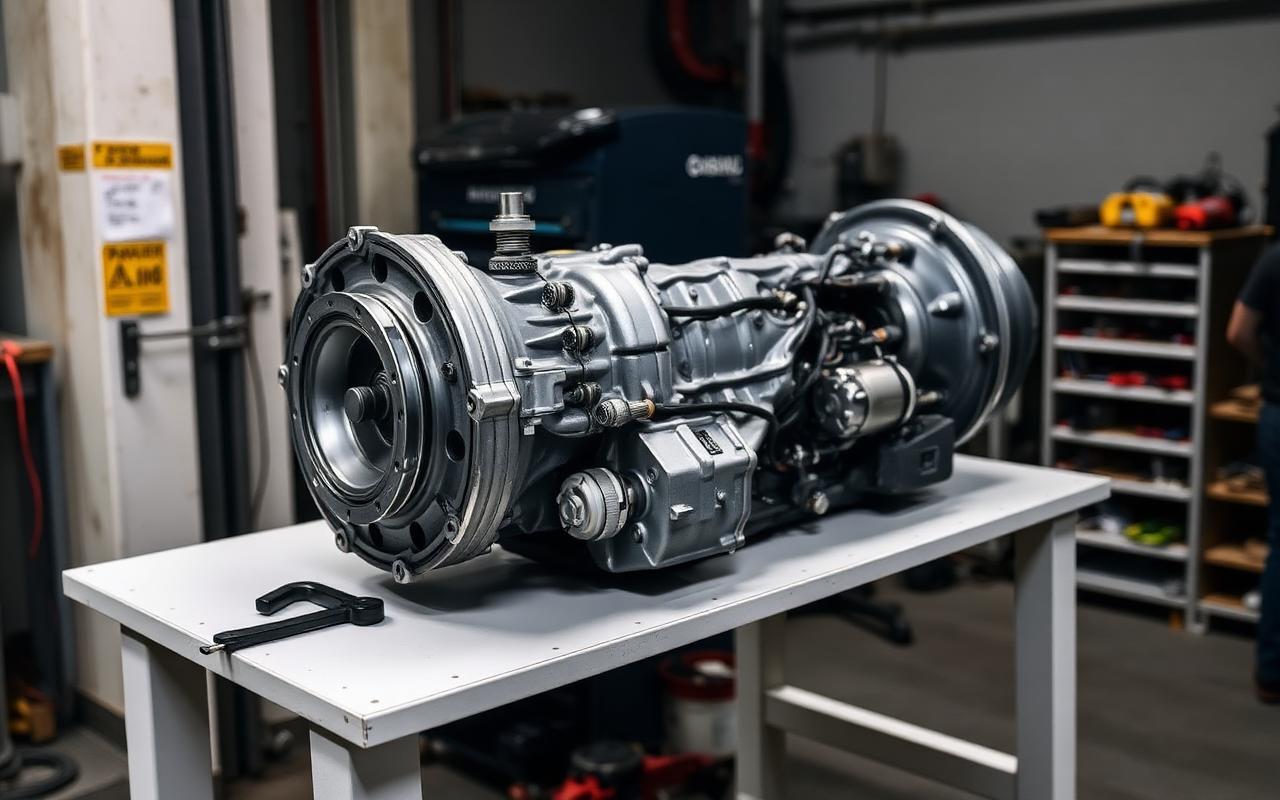
On the great majority of vehicles, the clutch assembly sits between the engine and gearbox and cannot be accessed without removing the gearbox from the vehicle. This is a substantial job involving safely supporting the engine or gearbox, and disconnecting the driveshafts, wiring and selector linkages. On some vehicles it also involves exhaust or subframe components, before the gearbox can be withdrawn far enough to expose the clutch. This is why labour time for clutch replacement is broadly consistent for a given vehicle layout, regardless of whether a solid or dual-mass flywheel is fitted.
A dual-mass flywheel uses two separate masses connected by internal springs and dampers to absorb engine vibration and torsional pulses before they reach the gearbox. This reduces gear rattle and vibration compared with a solid flywheel, particularly on diesel and higher-torque petrol engines. These internal components can wear, developing excess play between the two masses, which is felt as vibration, rattling at idle, or judder during clutch engagement.
Manufacturers generally specify replacing a worn dual-mass flywheel alongside a new clutch. This is because fitting new clutch components onto a worn flywheel means the flywheel's internal wear can transmit vibration into the new clutch assembly. This can shorten its life and prevent it from performing as intended, even though the clutch parts themselves are new.
Clutch slip and a high biting point can look similar from the driver's seat but usually indicate different faults. Slip is typically a friction material or contamination issue with the disc itself. A high biting point without slip can be a hydraulic issue, such as a worn master or slave cylinder losing efficiency. It can also simply be the natural result of a disc wearing thinner over its life and needing more pedal travel to disengage. Distinguishing between these before work begins avoids unnecessary hydraulic component replacement when the cause is purely the friction disc, or vice versa.