A respray is rarely just about spraying paint onto a panel. It starts with preparing the surface underneath it, because paint only ever looks as good as what it's applied over. Any existing damage, corrosion, filler or uneven surface has to be addressed first, or it will show through the new finish once it's cured and under direct light.
Colour matching is the part customers notice most, and it's also the part most likely to go wrong if it's rushed. Modern vehicle paint is rarely a single flat colour — most finishes today are multi-stage, combining a base coat, sometimes a pearlescent or metallic mid-coat, and a clear lacquer on top. Even paint that is technically the correct factory code can look slightly different from panel to panel because of the angle of light and the age and fade of the surrounding paint. Batch variation in how paint was originally applied at the factory adds to this. Our painters use computerised colour-matching software as a starting point and then adjust by eye and by test spray, because software alone doesn't account for how a specific car's paint has aged.
This is where blending becomes important. If we spray a single door and stop sharply at its edges, even a perfect colour match can show a visible line where new paint meets old. This is because clear coat gloss and slight colour variation are more visible at a hard edge. For that reason, we often blend paint into an adjacent panel — feathering the edge of the new colour into the neighbouring panel's clear coat so the transition is invisible. This is rather than trying to achieve an impossible pixel-perfect match at a sharp boundary. Whether blending is needed, and how far it needs to extend, is a judgement made by the painter looking at the actual car, not a fixed rule.
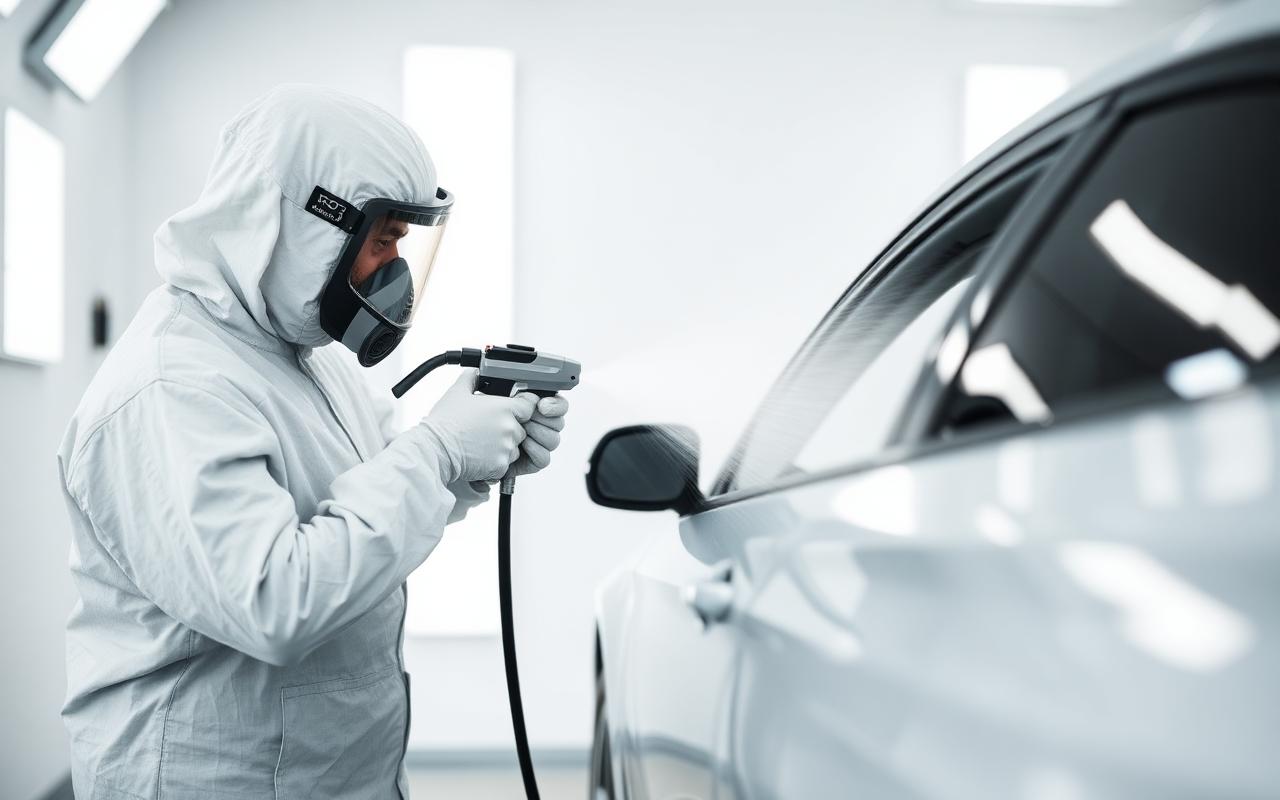
We operate three spray booths on site, which lets us control temperature, airflow and dust levels independently of whatever the British weather is doing outside. This matters because paint curing is temperature and humidity sensitive — spray in the wrong conditions and you risk orange peel texture, solvent pop, or a clear coat that never reaches full hardness. Having multiple booths also means we're not forced to batch unrelated vehicles through a single space, which reduces the risk of dust contamination and cross-work delays.
When customers come to us
- Faded or mismatched paint on one panel
- Sun exposure, age and previous poor-quality repairs can leave one panel visibly lighter or a different shade to the rest of the car. We assess whether a spot repair with blending will resolve it or whether a wider respray is the honest answer.
- Stone chips and scuffs through to primer or metal
- Small chips can look minor but expose bare metal to moisture, which starts corrosion under the paint if left. These are repaired properly rather than just filled over cosmetically.
- Poor previous respray from elsewhere
- Orange peel texture, visible overspray, dull clear coat or a poor colour match from an earlier repair can usually be corrected, though this sometimes means redoing more of the panel than the original repair covered.
- Full respray for condition or colour change
- Some customers want a full respray to restore an older vehicle's finish, or occasionally a genuine colour change. Both require the same preparation discipline as accident repair paintwork.
- Bumper or plastic panel colour matching
- Bumpers and plastic trims take paint differently to metal panels and need a flexible additive in the paint system so the finish doesn't crack when the panel flexes.
- Clear coat peeling or cracking
- Once clear coat starts to lift or craze, it will continue to spread. The affected area needs to be fully removed and resprayed rather than patched.