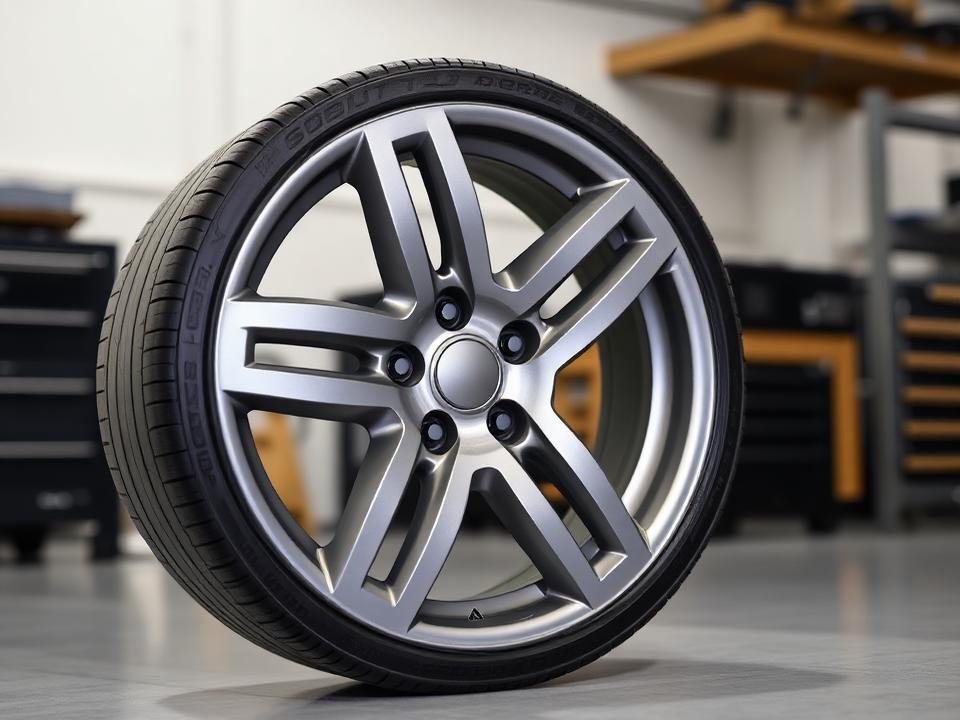
Caliper painting is one of those jobs that makes most sense at a particular moment: when the wheels are already off the car for another reason. Once a wheel refurbishment or repair has the tyre and wheel removed, the caliper behind it is fully exposed and accessible in a way it simply is not with the wheel fitted. This is why we routinely offer caliper painting alongside wheel work, rather than as a job requiring a separate visit and separate wheel removal.
The process starts with proper preparation, because paint applied over grime, brake dust and old flaking coating will not last regardless of the coating used. The caliper is thoroughly cleaned to remove built-up brake dust, road grime and any residue, and any existing loose or flaking paint is removed so the new coating has a sound surface to bond to.
Masking is a genuinely careful stage of this job, because a caliper sits extremely close to several components that must never be painted over. The brake pads, the disc itself, the wheel bearing area and, critically, the rubber seals and bleed nipple components all need to be properly protected during masking. Paint or overspray on any of these can affect their function, seal integrity or, in the case of the disc and pads, the braking surface itself.
We use coatings specifically suited to the heat a caliper experiences during braking. Calipers get genuinely hot in normal use, and a standard decorative paint would not stand up to that heat cycling without discolouring, cracking or peeling. These coatings are chosen and applied specifically because they are formulated to tolerate that environment.
When customers come to us
- Faded or discoloured calipers behind fresh wheels
- Newly refurbished wheels making dull, sun-faded or dusty-looking original caliper paint far more noticeable than before.
- Peeling or chipped factory caliper paint
- Original caliper coating that has started to flake or chip with age and heat cycling, looking untidy through the wheel spokes.
- Wanting a colour to match a new wheel finish
- A colour change on the wheels that the owner wants complemented by a matching or contrasting caliper colour.
- Corrosion or rust staining on caliper bodies
- Surface corrosion on the caliper housing itself giving a tired, neglected look even where the wheels are in good condition.
- Wanting calipers painted while wheels are already off
- Owners having wheel refurbishment done who want to take the opportunity to have calipers refreshed at the same time, since access is already available.