360 Body Shop

Ceramic Coatings

A ceramic coating is a protective layer bonded to the surface of your paint that improves gloss, water behaviour and chemical resistance for an extended period. It's a genuinely useful product when applied to properly prepared paint, but it isn't scratch-proof or maintenance-free, and we're upfront about that before you book.

Ceramic coating being applied to a vehicle panel

About this service

Ceramic coating is a liquid polymer product that chemically bonds to a vehicle's clear coat, curing into a hard, glossy protective layer. It's applied on top of the paint's existing clear coat rather than replacing it, so the coating's performance is entirely dependent on the condition of the paint underneath. This is why preparation makes up the majority of the work involved in a proper coating application, not the coating itself.

Preparation starts with a thorough decontamination: removing bonded iron particles, tar and general environmental fallout that a normal wash leaves behind, using dedicated products and clay treatment. Where the paint has swirl marks, light scratches or oxidation, correction may be carried out where required to level the surface before coating. This step matters because a coating is transparent and hard. It will preserve and seal whatever condition the paint is in at the point of application, defects and all, essentially locking them in until the coating eventually wears down.

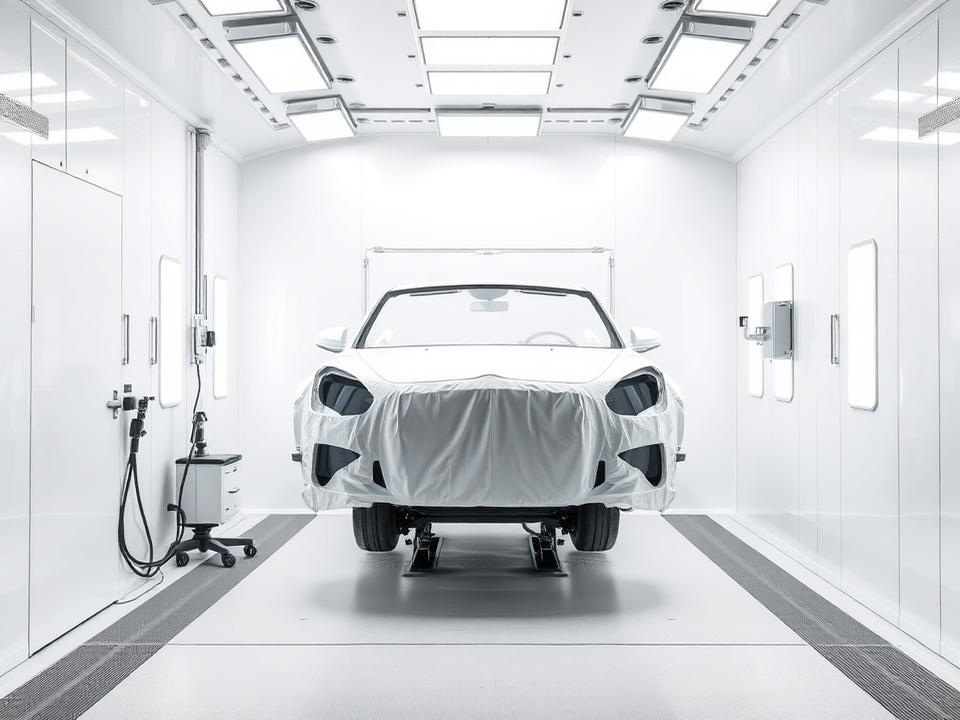
Application itself is a controlled process, usually carried out in a dust-free environment. The coating is applied panel by panel using an applicator, left to flash off for a specified time, then buffed to remove any excess before it fully cures. Curing takes place over subsequent hours and, for full hardness, over the following days. During this time the vehicle needs to avoid water contact and, ideally, be kept indoors so the coating can bond properly without disruption.

Once cured, a ceramic coating changes how the paint behaves in several noticeable ways. It creates a hydrophobic surface, meaning water beads up and rolls off rather than sheeting across the paint, which helps the car dry faster and reduces water spotting. It adds a layer of chemical resistance against things like bird droppings, tree sap and mild acidic contaminants, giving you a slightly longer window to clean them off before they etch into the paint. And it typically deepens gloss and colour clarity compared to bare, uncoated paint, particularly on darker colours.

When customers come to us

Wanting longer-lasting gloss and easier cleaning
A coating's hydrophobic surface makes dirt, water and light grime easier to rinse off and helps maintain gloss between washes for an extended period.
Bird droppings and tree sap etching into paint
Coatings add chemical resistance that gives you a slightly longer window to remove acidic contaminants before they etch the clear coat, though prompt removal still matters.
Wanting to protect a new or recently repaired vehicle
Coating fresh paint (once fully cured from any respray) helps protect the new finish from the start, provided decontamination and any needed correction are done first.
Confusion over coating vs wax vs sealant
Ceramic coating bonds more durably and lasts considerably longer than wax or synthetic sealant, though it comes at a different level of preparation and cost.
Existing swirl marks or contamination under consideration for coating
These need addressing through decontamination and correction before coating, since the coating will otherwise seal them in permanently.
Uncertainty about coating durability claims
We explain realistically how a coating's performance changes over its service life and what maintenance is needed to get the most from it.

What the work includes

  • Paint condition assessment and clear coat check
  • Full decontamination (iron removal and clay treatment)
  • Paint correction where required to remove defects before coating
  • Panel-by-panel coating application in a controlled environment
  • Buffing and levelling of excess product
  • Guidance on curing time and post-application care
  • Washing technique and product guidance for coating maintenance
  • Advice on realistic coating lifespan and maintenance needs

How it works

The 360 process for ceramic coatings

  1. 01

    Assessment

    We check the paint's condition and clear coat health to confirm the vehicle is suitable for coating and identify any preparation needed first.

  2. 02

    Decontamination

    Iron and tar removal and clay treatment strip the paint back to a genuinely clean surface, which the coating needs to bond properly.

  3. 03

    Correction (where required)

    Swirl marks, light scratches or oxidation are addressed through machine polishing so they aren't sealed in underneath the coating.

  4. 04

    Coating application

    The coating is applied panel by panel in a controlled environment, worked in with an applicator, and buffed within the product's working time.

  5. 05

    Curing and handover

    The coating is left to cure before the vehicle is handed back, along with specific guidance on avoiding water contact during initial curing and how to wash and maintain the coating afterward.

Capability

What a ceramic coating actually changes

Ceramic coatings are based on silica or similar inorganic compounds that cross-link into a hard, glass-like layer once cured. This layer sits on top of the existing clear coat, filling in microscopic surface irregularities, which is part of why coated paint reflects light more uniformly and looks glossier than the same paint uncoated.

The hydrophobic effect comes from the coating's very high surface tension, which causes water to bead into tight droplets rather than spreading into a sheet. This isn't just cosmetic — beading water carries dirt off the surface as it rolls, reducing the amount of grime that dries onto the paint between washes.

Chemical resistance from a coating is relative, not absolute. It raises the paint's resistance to mild acids and contaminants like bird droppings and tree sap for a period, giving you more time to clean them off safely. But it doesn't make the paint immune, and prompt cleaning of contaminants is still the safest approach.

A coating's durability is generally measured in hardness (often described using a pencil-hardness scale) and expected service life, but both are affected heavily by how the car is washed and maintained afterward. A coating maintained with correct technique and pH-neutral products will outlast the same coating exposed to abrasive automated washes.

  • Hydrophobic water behaviour
  • Enhanced gloss and colour clarity
  • Improved chemical resistance
  • Not a substitute for correct washing technique

What a coating won't do

A ceramic coating is not scratch-proof. It adds a hard protective layer but will not prevent marks from a careless wash mitt, contact with another object, or a stone chip. Some of these can go through the coating into the paint beneath. It is also not maintenance-free: correct washing technique and periodic maintenance are needed to get the coating's expected performance and lifespan. Its hydrophobic and gloss properties will gradually diminish over time regardless of how it's cared for. Coating over unaddressed paint defects or contamination seals them in rather than fixing them.

Why 360

Why customers choose us for this work

Preparation-first approach
We treat decontamination and correction as essential preparation, not optional extras, because the coating's result depends entirely on what's underneath it.
Controlled application environment
Coating is applied in a controlled space to avoid dust and contamination affecting the cured finish.
Honest durability guidance
We explain realistically how a coating performs over time and what maintenance is needed, rather than overstating how long-lasting or maintenance-free it is.
Aftercare support
You get specific washing and maintenance guidance for your coating, not generic advice.

Reading facility

Arkwright Road, Reading

  • 360 Body Shop
  • 360 Accident Management

Body repair, paint, structural repair and nationwide accident management support.

8 Arkwright Road, Reading, Berkshire, RG2 0LU
0118 391 3727

Monday – Friday: 9:00am – 6:00pm

Saturday: By appointment only

Sunday: By appointment only

Questions

Ceramic Coatings — frequently asked

360 Body Shop

Enquire About Ceramic Coating

Cosmetic, structural and insurance-quality vehicle repairs.

Add photos if they help us understand the work. This is optional.

We’ll use these details only to respond to your enquiry and manage any work you ask us to complete. View our Privacy Policy.