Being told, or believing, that an accident was not your fault does not automatically make everything that follows simple. Liability still has to be established with evidence. Until it is, practical questions such as who pays the excess, who arranges recovery, and whether a no-claims discount is protected cannot always be answered with certainty. Understanding this from the outset helps set realistic expectations.
A non-fault accident, in general terms, is one where another driver's actions caused the collision, and where the evidence supports this. Establishing that position properly takes evidence: photographs, witness details, dashcam footage where available, damage patterns, and sometimes a police report. This is why the guidance to gather evidence at the scene, covered on our what-to-do page, matters so much in a non-fault claim.
For eligible non-fault cases, customers may have no excess to pay and may be able to protect their no-claims discount, subject to liability, insurer decisions and the terms of the claim. This is a genuinely valuable outcome where it applies, but it is not guaranteed in every case. It depends heavily on the strength of the evidence and how liability is ultimately determined between the insurers involved.
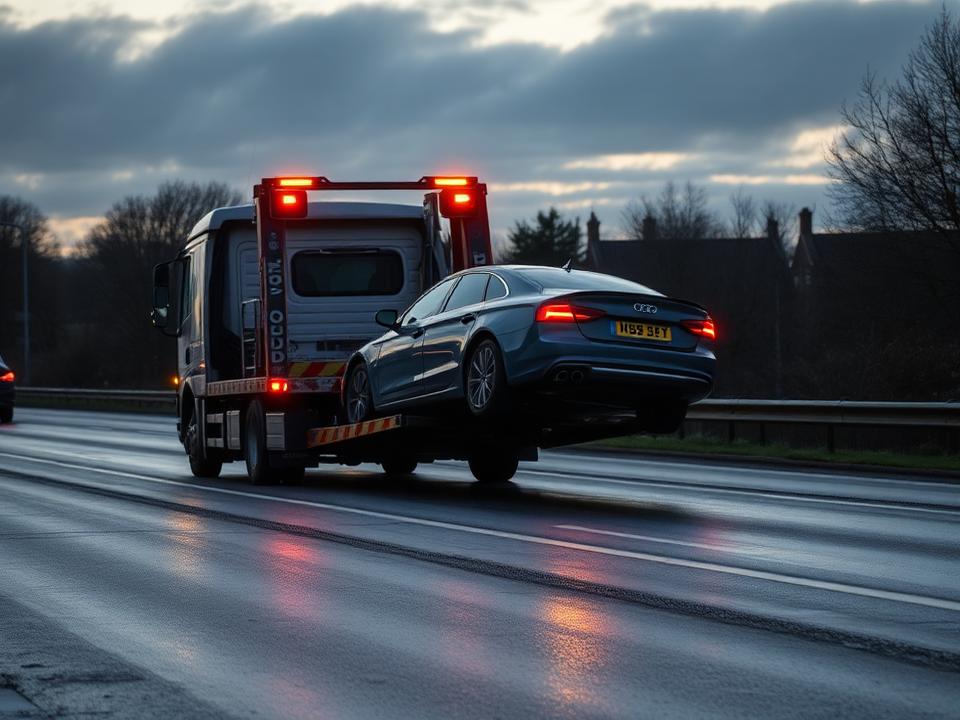
Recovery, assessment and repair generally proceed in a similar way regardless of fault, in the sense that a damaged vehicle still needs to be recovered, assessed and, where appropriate, repaired. What differs in a non-fault claim is where the costs are ultimately intended to come from, and this is why keeping good records and cooperating with the process matters throughout, not just at the roadside.
When customers come to us
- Uncertainty about whether a claim counts as non-fault
- Fault is determined by evidence and, ultimately, agreement or decision between insurers, not by how confident either driver feels at the scene. We help gather the evidence needed to support a non-fault position.
- Concern about paying an excess
- Many customers worry about upfront costs after an accident that was not their fault. For eligible non-fault cases, there may be no excess to pay, subject to liability and insurer decisions.
- Concern about losing a no-claims discount
- A no-claims discount built up over years feels vulnerable after any accident. Where a case is accepted as non-fault, it may be possible to protect this, though it is not automatic in every case.
- Not knowing what evidence is needed
- Photographs, witness details and documentation gathered early make a real difference to how smoothly a non-fault claim progresses. We advise on what is genuinely useful to collect.
- Dealing with an uncooperative third party
- Sometimes the other driver or their insurer disputes liability, which slows the process. We manage this communication and explain honestly where a dispute affects timescales or outcome.
- Not understanding split liability
- Some accidents result in liability being shared between drivers rather than falling entirely on one party. We explain what this means for excess, no-claims protection and cost recovery in your specific case.