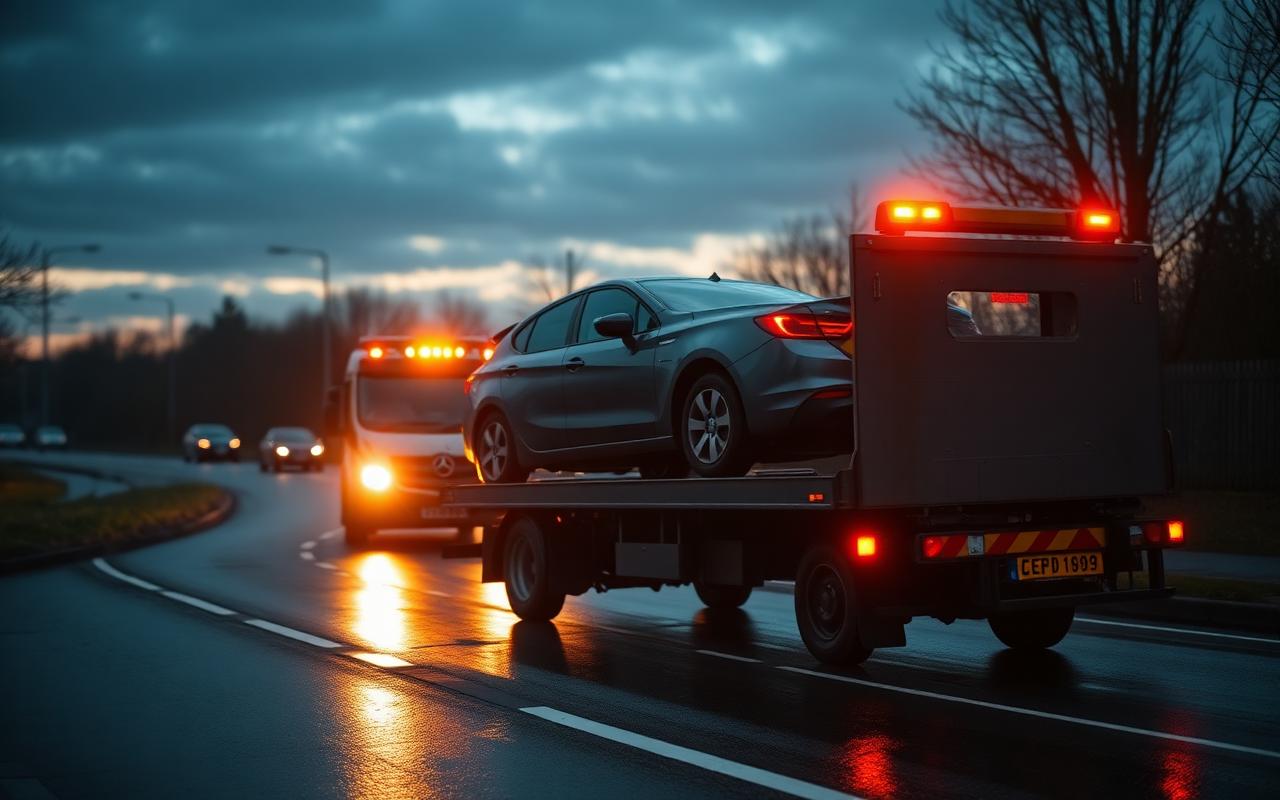
An accident involving a commercial or fleet vehicle carries a different set of pressures compared with a private car. There is usually a driver whose immediate safety and wellbeing matters first, and a vehicle that needs recovering and assessing. There is also an operation, whether that is deliveries, callouts or passenger transport, that depends on that vehicle being back on the road as soon as it reasonably can be.
Driver safety comes first, in exactly the same way it does for any accident: if anyone is injured or in immediate danger, the emergency services are contacted before anything else. Once the driver is safe, the practical process of recovery, assessment and repair coordination begins, generally alongside a call to whoever manages the fleet, so that the wider operational impact can start being managed too.
Downtime is often the central concern for a fleet operator, more so than for a private individual, because a vehicle off the road can mean lost revenue, missed deliveries or rescheduled work. We recognise this and factor it into how we prioritise and communicate. We are careful, though, never to promise a specific return-to-service date before the vehicle has actually been assessed, since doing so would risk setting an expectation the facts may not support.
Replacement mobility for a commercial driver is not always as simple as providing a like-for-like vehicle, since commercial vehicles vary enormously in specification, size and purpose. We discuss genuine operational need as part of assessing what, if anything, can be arranged, while being clear that an identical replacement vehicle cannot be guaranteed.
When customers come to us
- Driver safety and wellbeing immediately after an accident
- A driver involved in an accident needs the same safety priority as any road user, and support in the immediate aftermath, before commercial considerations come into play.
- Needing a single fleet contact point
- Managing communication across multiple drivers and vehicles individually is inefficient. A single coordinated point of contact for the fleet manager makes this considerably easier.
- Operational downtime
- A commercial vehicle off the road can affect deliveries, jobs or contracts. We prioritise clear, honest communication about progress rather than vague reassurance.
- Uncertainty about replacement mobility
- Commercial vehicles are not always easily substituted, and we discuss genuine operational need honestly rather than promising a like-for-like replacement in every case.
- Coordinating repair around commercial requirements
- Livery, signage, racking and specialist equipment all need to be considered as part of a commercial vehicle repair, not just the bodywork itself.
- Managing multiple vehicles or incidents
- Fleet operators sometimes need to manage several vehicles at once, whether from one incident or several. Consistent coordination helps avoid duplicated effort and confusion.