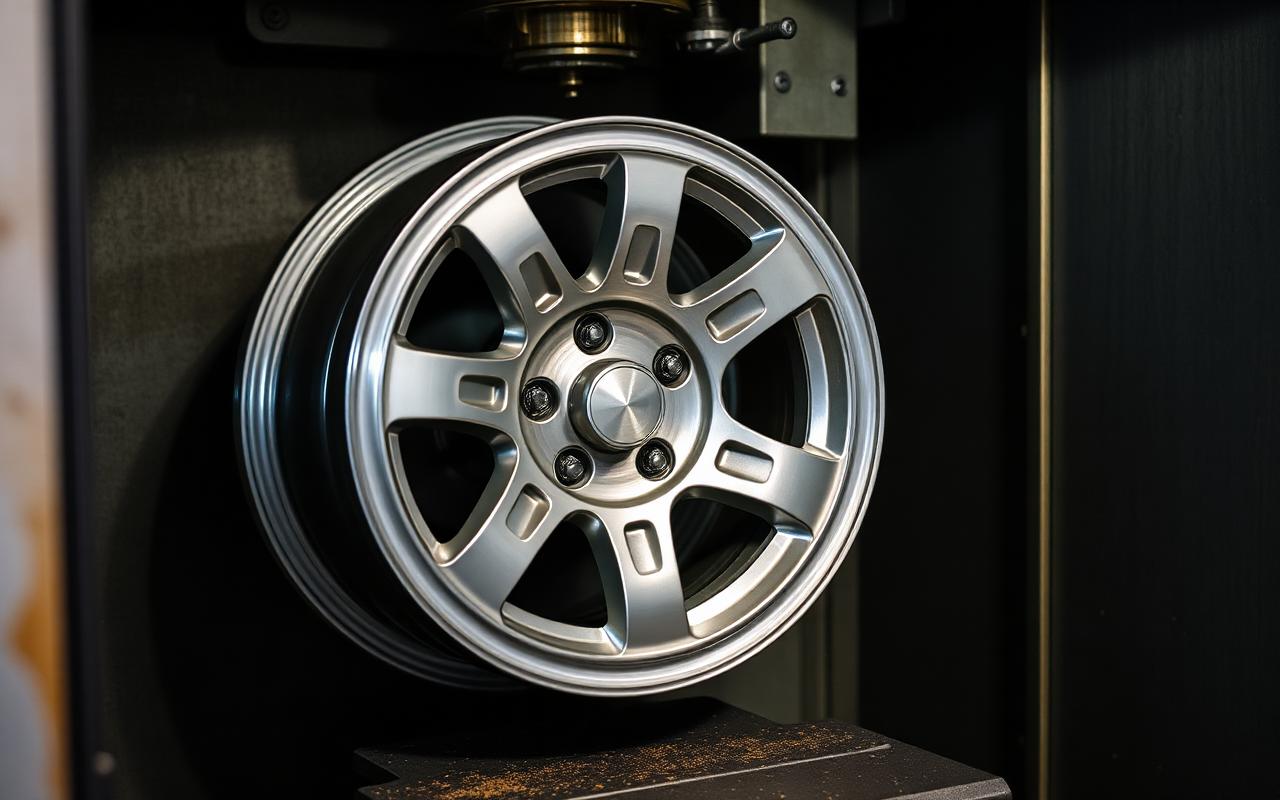
Diamond cutting is a machining process rather than a paint finish. The wheel is mounted on a precision lathe, and a fine cutting tool removes a very thin layer from the face of the wheel. This exposes bright bare aluminium in a crisp pattern — typically the raised spoke faces against a painted background. It is what gives many factory alloy wheels their two-tone look, with the machined face contrasting against the painted insert colour.
Because it is a cutting process rather than a coating, it behaves differently to paint or powder coat in a few important ways. The finish depends entirely on precise, even material removal, which means the wheel needs to be properly centred and balanced on the lathe before cutting begins. Any wobble or misalignment shows up immediately as an uneven cut, which is why this work needs to be done on purpose-built equipment by someone experienced with it, not attempted with generic tools.
Painted inserts are usually applied before the cutting stage, or occasionally after, depending on the wheel's design and the specific look being achieved. We assess each wheel's original design and, where you are after a factory-style finish, aim to match the insert colour and cut pattern the wheel would have carried originally. For a custom look, we discuss the insert colour with you directly.
Once the machining is complete, a clear protective lacquer is applied over the bare cut alloy and cured. This lacquer is doing a genuinely important job: bare aluminium corrodes if left exposed, so the lacquer is the only thing standing between the freshly cut surface and moisture, road salt and general weather. When that lacquer eventually fails — through age, stone chips, or harsh wheel-cleaning chemicals — the exposed alloy underneath begins to corrode. This shows up as a dull, grey, sometimes pitted ring where the bright cut finish used to be.
When customers come to us
- Dull or corroded diamond-cut finish
- Lacquer failure has let moisture reach the exposed alloy, leaving a grey, pitted ring where the finish used to be bright and reflective.
- Wanting the original factory two-tone look restored
- A wheel that has been overpainted or badly refinished in the past and needs the machined-and-painted contrast look brought back properly.
- Uncertainty about how many times a wheel has been cut
- Owners often do not know their wheel's cutting history, and we will not simply cut again without first checking how much material realistically remains.
- Kerb damage on a previously diamond-cut wheel
- Kerb strikes affect the cut face differently to a painted one, since the damage disrupts the machined surface itself rather than just the paint layer.
- Wanting diamond cutting on wheels that have never had it
- Some wheel designs suit a cut finish even if they were originally painted, and we can assess whether a particular design and alloy are suitable.
- Insert colour mismatch
- The painted insert colour has faded or been replaced with the wrong shade previously, leaving an obvious mismatch against the cut face.