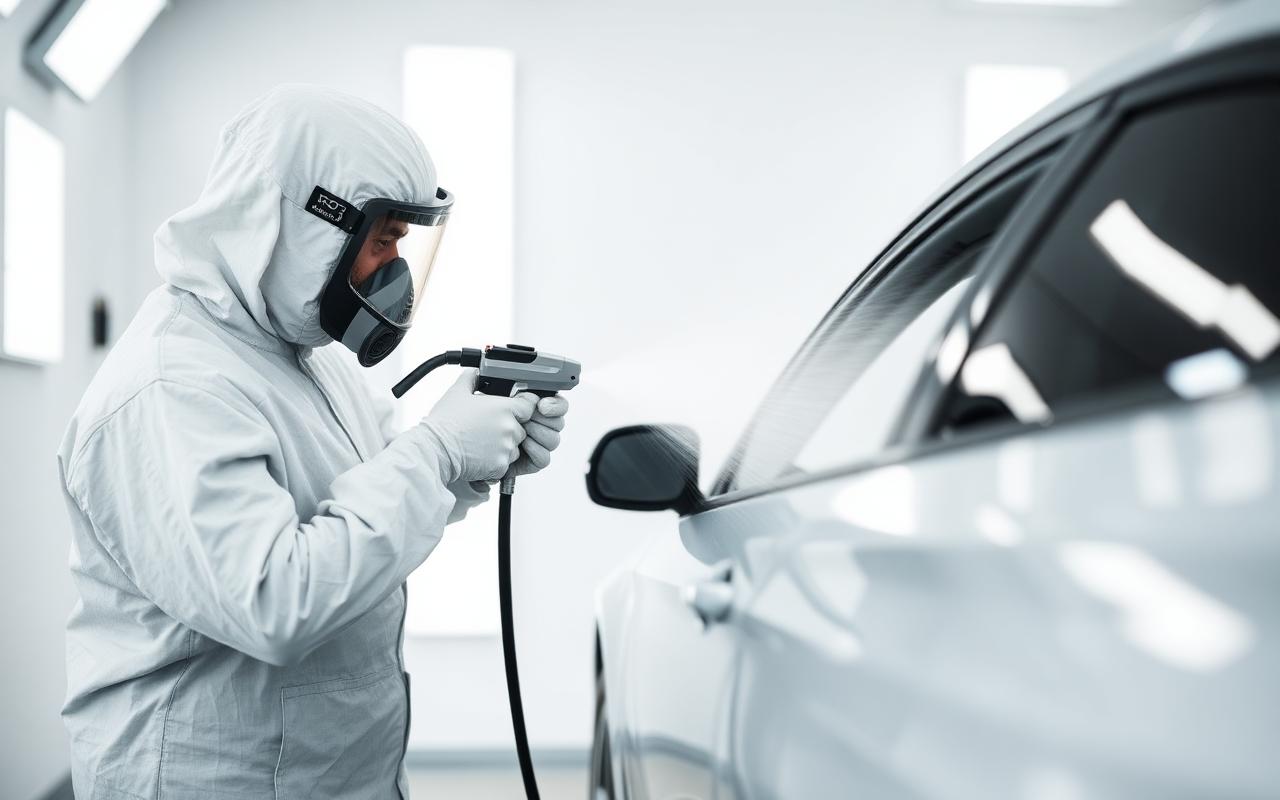
A car's paint is built up in layers — primer, colour basecoat, and a clear-coat on top that gives the shine and most of the protection. What matters most in repairing a scratch or scuff is how deep it's gone through those layers, because a mark confined to the clear-coat is a very different job to one that's reached bare metal. We inspect every scratch under suitable lighting, because surface depth is often difficult to judge accurately under poor light or from a quick glance.
Marks that sit only in the clear-coat, and haven't disturbed the colour basecoat underneath, can often be improved or fully removed through machine polishing, without any paint being applied at all. This is the least invasive option and, where it's genuinely suitable, keeps the original factory finish completely intact. It only works, though, if the scratch truly hasn't broken through to the colour layer — polishing a deeper scratch will not remove it and can thin the clear-coat unnecessarily.
Once a scratch has gone through the clear-coat into the basecoat, or further into the primer or bare metal, polishing alone won't resolve it, and some form of refinishing is needed. Where the colour layer is exposed but the damage is fairly localised, we can often carry out a local repair. This means filling and re-coating the specific area and blending the edge into the surrounding original paint so the transition isn't visible. Where damage is more widespread, or the local blend wouldn't sit well with the colour, refinishing a larger section of the panel gives a better result.
Scratches that reach bare metal need particular attention because exposed metal is vulnerable to corrosion, especially in a UK climate with regular rain and road salt in winter. Leaving a bare-metal scratch unrepaired for any length of time increases the risk of rust developing under the paint, which is a bigger and more expensive problem than the original scratch. We prioritise proper primer coverage on this type of damage rather than treating it as purely cosmetic.
When customers come to us
- Light scratches that catch the light
- Fine marks visible mainly at certain angles are often confined to the clear-coat and may be improved significantly, or removed, through machine polishing.
- Scratches showing a different colour underneath
- If a scratch reveals white, grey or a different colour beneath the paint, it has likely reached the primer or basecoat and needs refinishing rather than polishing.
- Scratches down to bare metal
- Where the metal itself is visible, there's a real corrosion risk if it isn't repaired promptly, so we treat this type of damage as a priority.
- Trolley and door scuffs
- Common in car parks, these vary from surface marks to deeper scuffs that have transferred paint or material from whatever caused the contact.
- Stone chips on the bonnet or bumper
- Small chips from road debris often go through to primer or metal despite their size, and benefit from proper touch-in repair rather than being left.
- Previous poor-quality touch-up repairs
- DIY touch-up paint or a poorly matched earlier repair can leave a visible patch; we assess whether it can be corrected with a proper blend or needs a wider refinish.