360 Alloys

Alloy Wheel Refurbishment

A proper alloy wheel refurbishment strips each wheel back to bare metal, repairs the damage underneath and rebuilds the finish in stages rather than painting over the problem. It is a genuine workshop process, not a same-day cosmetic wipe-over, and every refurbished wheel leaves us with a twelve-month warranty, subject to terms.

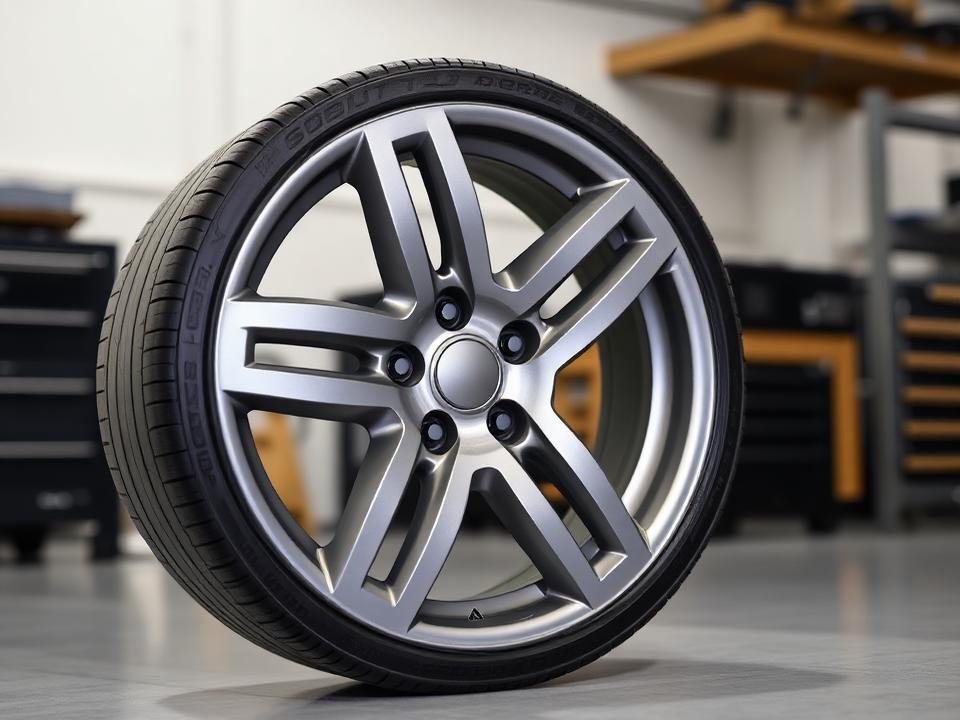
Alloy wheel mid-refurbishment on a workshop stand with the tyre removed

About this service

Alloy wheels take a genuine battering over the years. Kerbs, potholes, winter salt and years of automatic car washes leave scuffed edges, corrosion under the lacquer and a finish that no longer matches how the car looked when it left the factory. A refurbishment is our answer to that. Rather than covering the wheel with a fresh coat of paint, we take the wheel off the car, strip the old finish away entirely, and rebuild it properly from the bare alloy upwards.

This matters because a wheel that looks tired on the surface is often hiding more underneath. Lacquer that has started to lift or bubble is usually a sign that moisture has already got underneath it and started attacking the alloy. Kerb damage that looks like a scuff is sometimes a deeper gouge that has taken material away from the rim. You cannot see the true extent of either of these until the old finish is off. This is exactly why we do not offer to refurbish a wheel from a photograph alone — every wheel is properly assessed once it is stripped.

How we decide what a wheel needs is straightforward but important to explain. A wheel with light cosmetic scuffing and no structural concern is a candidate for a cosmetic touch-up, which is a lighter, faster job focused on the visible damage. A wheel with corrosion, deeper kerb damage, a poor previous repair, or a finish that needs to come off entirely to be corrected is a candidate for complete refurbishment. Where we find cracking, significant bending, or damage close to the wheel's structural areas during that assessment, we will tell you honestly. Some damage needs repair work — or in some cases replacement — rather than refinishing over the top of it. We never disguise a structural problem with paint.

Cost on a refurbishment is driven by a genuine set of factors rather than a flat per-wheel rate. These include the wheel's size and design — a multi-spoke or diamond-cut wheel takes longer to mask and finish than a simple five-spoke design. They also include the extent of corrosion or kerb damage found once the wheel is stripped, and the finish you choose. Further factors are whether all four wheels are being done to the same standard, and whether tyres need to be removed and refitted as part of the job. We will always explain what has driven the cost of your particular wheels rather than quoting a number with no context.

When customers come to us

Kerbed alloys
Scraped edges from parking or tight junctions that have taken paint and sometimes metal off the rim's outer lip. Depth of the gouge determines whether it is a cosmetic fix or needs proper material repair.
Corrosion and lacquer bubbling
White, powdery corrosion or lifting lacquer is a sign moisture has reached the bare alloy underneath. Left alone it spreads under the remaining finish, so it needs to be stripped and treated, not painted over.
Faded or mismatched colour
UV exposure and repeated washing dulls factory finishes unevenly across a set of wheels, particularly on darker colours, leaving one or two wheels visibly different from the rest.
Previous poor refurbishment
A rushed prior repair — thin paint over unstripped corrosion, or lacquer applied without proper preparation — that has already started to fail again and needs to be corrected properly this time.
Alloy wheels ahead of sale or valuation
Tired wheels drag down a car's overall impression more than most owners expect, and a full refurbishment is one of the more visible improvements you can make before selling or trading in.
Diamond-cut finish gone dull or corroded
The exposed bare-metal band on a diamond-cut wheel corrodes if the lacquer fails, which shows as a grey, pitted ring rather than the bright machined finish it started with.

What the work includes

  • Removal of the wheel and tyre from the vehicle
  • Valve and balance weight removal
  • Tyre removal from the rim where the wheel needs full access for repair
  • Complete stripping of the existing paint, lacquer and any prior filler
  • Full damage assessment once the wheel is bare
  • Repair of kerb damage, pitting and minor material loss
  • Surface preparation, including cleaning and keying of the bare alloy
  • Corrosion treatment where lacquer failure has affected the surface
  • Primer application
  • Colour or diamond-cut finish application as agreed with you
  • Protective lacquer application and curing
  • Tyre refitting and inflation to the correct pressure
  • Wheel balancing
  • Final inspection before the wheel is signed off and refitted

How it works

The 360 process for wheel refurbishment

  1. 01

    Initial inspection

    Every wheel is inspected on arrival with the tyre still fitted, checking for obvious cracks, heavy corrosion or damage close to the wheel's structural areas that might affect whether refurbishment is appropriate at all.

  2. 02

    Tyre, valve and weight removal

    The tyre is removed from the rim, along with the valve and any existing balance weights, giving full access to every part of the wheel including areas hidden by the tyre bead.

  3. 03

    Stripping and full damage assessment

    The wheel is stripped of all existing paint and lacquer, and only once it is bare can we properly see and assess corrosion, pitting, filler from a previous repair, or any deeper damage.

  4. 04

    Preparation and repair

    Kerb damage and pitting are repaired, corroded material is treated back to a sound surface, and the wheel is prepared and keyed ready to accept primer evenly across the whole surface.

  5. 05

    Priming and finish application

    Primer is applied first to promote adhesion and even coverage, followed by the agreed colour, diamond-cut machining, or powder-coated finish depending on what you have chosen.

  6. 06

    Lacquer and curing

    A protective lacquer is applied over the finish and cured for the time that finish requires — this is the stage that most affects long-term durability, so it is not rushed to save time.

  7. 07

    Tyre refitting, balancing and final inspection

    The tyre is refitted, the wheel is rebalanced on the vehicle's specification, and the finished wheel undergoes a final visual and functional inspection before it goes back on the car.

Capability

Cosmetic touch-up vs complete refurbishment

A cosmetic touch-up addresses visible surface damage — a scuffed edge, a small chip, light fading — without stripping the wheel back to bare metal. It is a genuinely useful option where the wheel's underlying finish and structure are sound. It is also faster and less involved than a complete refurbishment because far less of the wheel needs to be reworked.

A complete refurbishment removes the tyre, strips every layer of the old finish, and rebuilds the wheel from bare alloy through primer, finish and lacquer. It is the right choice where there is corrosion under the lacquer, deeper kerb damage, or a poor prior repair. It is also right where you want a genuinely even, uniform finish across the whole wheel rather than a patched area blended into old paint.

We will always recommend the option that matches what the wheel actually needs rather than defaulting to the more involved job. If a wheel only needs a touch-up, we will say so. If a wheel that looks like it only needs a touch-up turns out, once inspected, to have corrosion spreading under the lacquer, we will explain why a full refurbishment is the more sensible route.

Corrosion is one of the most common reasons a wheel needs full refurbishment rather than a touch-up. Alloy wheels are protected by their painted and lacquered finish. Once that finish is breached — by a stone chip, a kerb strike, or simple age — moisture reaches the bare alloy and starts to corrode it. That corrosion spreads under the surrounding lacquer even where the paint still looks intact, which is why we always strip fully rather than patching around visible corrosion.

Finish choice also affects the process. A diamond-cut finish is machined on our in-house lathe to expose bright bare alloy under a clear lacquer. It has a finite number of times it can be re-cut before too much material has been removed. A painted or powder-coated finish does not have that limitation in the same way, since the colour sits on top of the surface rather than being cut into it. This makes it the safer long-term option for a wheel that has already been diamond-cut more than once.

  • Cosmetic touch-up: surface repair only, faster turnaround, suited to sound wheels with light damage
  • Complete refurbishment: full strip, structural check, rebuild — suited to corrosion, deeper damage or colour changes
  • Diamond-cut finish: bright machined alloy under lacquer, limited by remaining material on repeat cuts
  • Powder-coated or painted finish: does not remove material, generally more durable for a wheel with a repair history

Honest limits on what refurbishment can achieve

Refurbishment is a cosmetic and protective process, not a structural repair. If our inspection finds cracking, significant bending, or damage in a structural area of the wheel, we will tell you before proceeding. Those wheels need dedicated repair assessment or, in some cases, replacement. We will not refinish over a wheel we are not confident is sound to run on the road.

Why 360

Why customers choose us for this work

Everything done in-house
Stripping, repair, priming, finishing, lacquering, diamond cutting and balancing are all carried out at our own Loverock Road workshop, with nothing subcontracted out.
Honest assessment before work starts
We tell you plainly whether a wheel needs a touch-up, a complete refurbishment, or further repair work, rather than upselling a bigger job than the wheel requires.
We say no when we should
If a wheel is not safe to refinish and run, we will tell you and explain the alternative rather than refurbishing over a structural problem.
Twelve-month warranty
Every refurbished wheel is covered by a twelve-month warranty, subject to terms provided at booking, giving you confidence in the finish that leaves our workshop.

Getting your vehicle to us

Because refurbishment involves removing wheels from the vehicle, we recommend leaving the complete car with us for the duration of the work. A courtesy car can be arranged subject to availability — please ask when booking.

Warranty

All alloy wheel refurbishment work carries a twelve-month warranty, subject to the terms confirmed at the time of booking.

Reading facility

Loverock Road, Reading

  • 360 Garage
  • 360 Alloys

Garage, MOT, diagnostics, mechanical repairs, performance and alloy-wheel refurbishment.

119 Unit 4 Loverock Road, Reading, RG30 1DZ
0118 394 3000

Monday – Friday: 9:00am – 6:00pm

Saturday: By appointment only

Sunday: By appointment only

Questions

Wheel Refurbishment — frequently asked

360 Alloys

Request an Alloy Quote

Complete wheel refurbishment, diamond cutting and structural alloy repair.

Add photos if they help us understand the work. This is optional.

We’ll use these details only to respond to your enquiry and manage any work you ask us to complete. View our Privacy Policy.