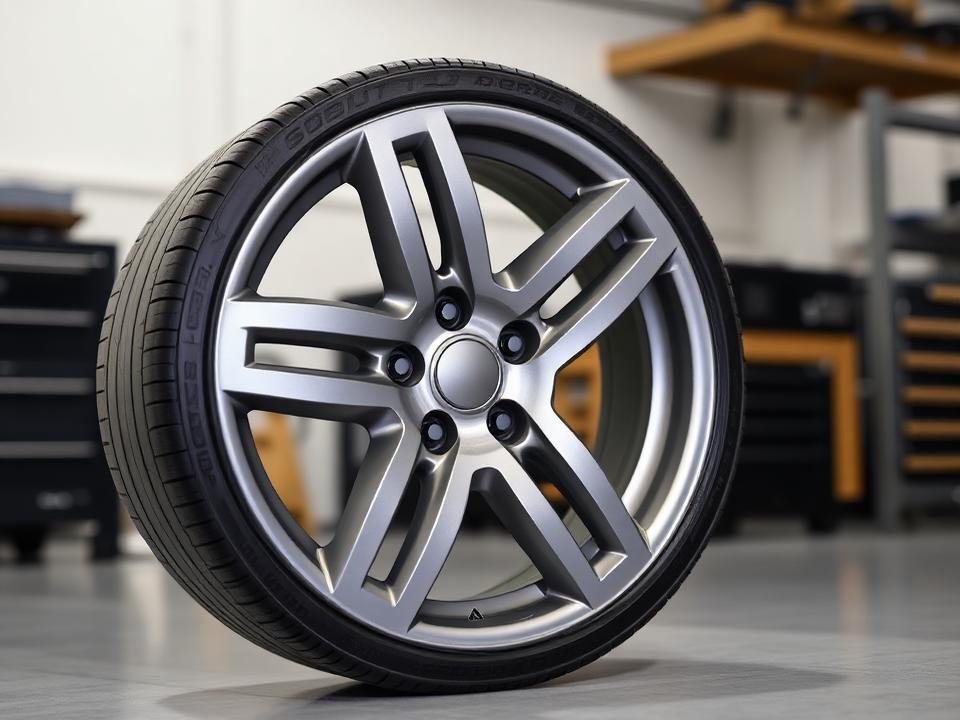
Cracks in alloy wheels are treated with more caution than almost any other type of wheel damage we see, and for good reason. A wheel carries the entire weight of the vehicle at that corner, transmits braking and cornering loads, and does so at speed, repeatedly, over years. A crack that seems small can be the visible tip of stress that runs deeper into the wheel's structure. Getting the assessment wrong has real safety consequences for whoever is driving on that wheel afterwards.
Cracks typically appear in a handful of common locations. These include around the wheel's bolt holes, where repeated clamping and torque loads concentrate stress, and along the spokes, particularly where a spoke meets the wheel's centre or the outer rim. Cracks also appear at the barrel or rim edge, often following a hard pothole or kerb impact that has flexed the wheel beyond what the metal could absorb. Where the crack sits matters as much as its size, because cracks in some locations experience far higher ongoing stress than others.
A cracked wheel commonly shows up first as slow air loss from the affected tyre, since a crack that breaches the wheel's sealing surface lets air escape even without a puncture in the tyre itself. Other times a crack is found visually during an inspection, or after a specific pothole or kerb impact prompts the owner to have the wheel checked. We recommend having any wheel checked promptly after a hard impact, even where there is no obvious sign of damage yet.
We assess every cracked wheel thoroughly before agreeing to any repair. This includes examining the crack's location, length and depth, checking whether it is a single isolated crack or connected to wider stress in the wheel, and considering the wheel's overall condition and repair history. Where we find a previous repair in the area, that also affects our assessment. A wheel that has already been welded once in a given location may not be a good candidate for repeating that repair.
When customers come to us
- Slow air loss from one tyre
- A tyre that keeps losing pressure with no obvious puncture is sometimes actually a crack in the wheel itself letting air escape through the sealing surface.
- Visible crack around a bolt hole
- Cracking near the wheel studs, often caused by repeated stress from clamping loads or a wheel that has previously been overtightened or run loose.
- Crack following a pothole or kerb impact
- A hard impact that has visibly cracked the rim edge or spoke, needing assessment before the wheel is driven on again.
- Hairline crack found during a routine check
- Small cracks spotted during a service or tyre change that need a full assessment even though the wheel currently seems to be holding air and pressure fine.
- Previous weld repair that has failed again
- A wheel repaired before in the same area that has cracked again, which needs careful assessment of whether repeating the repair is genuinely safe.
- Uncertainty after a hard pothole strike
- No visible crack yet, but concern after a significant impact that the wheel may have sustained hidden stress or a hairline crack that needs checking.