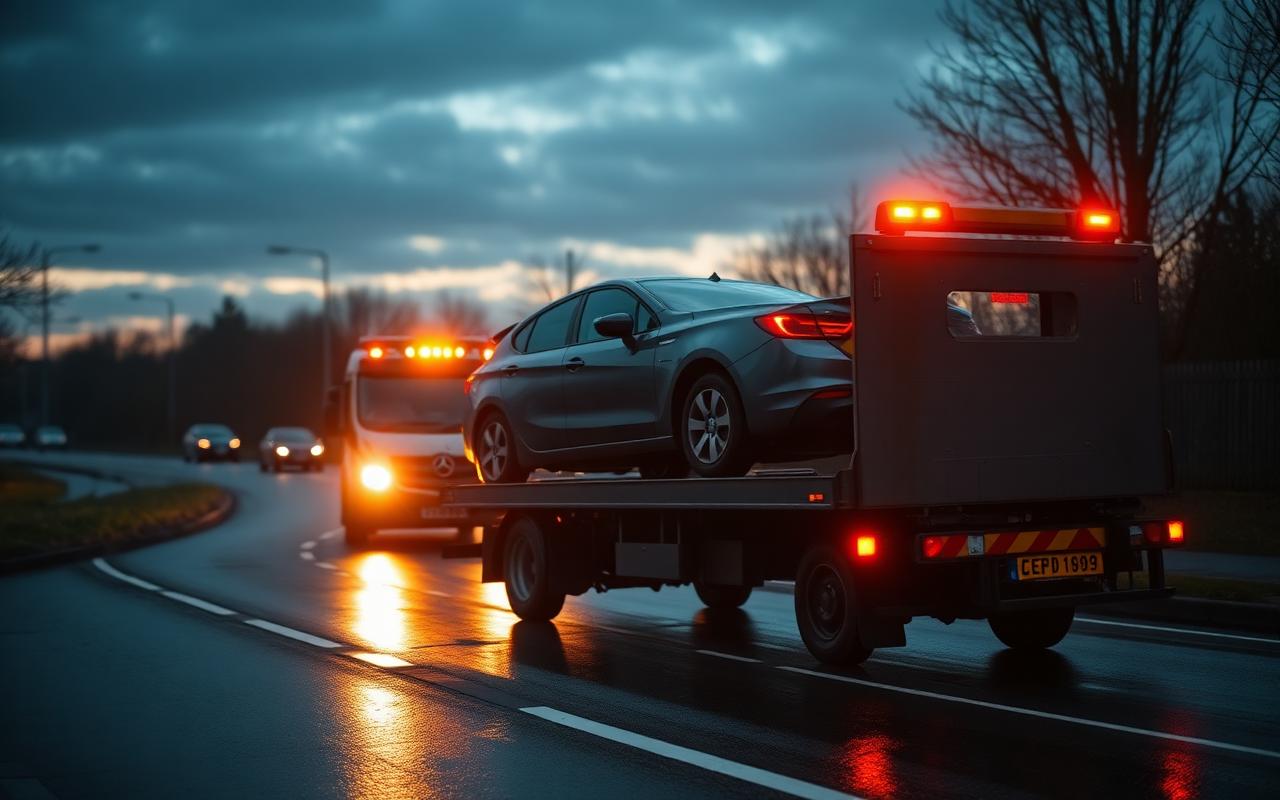
Being stranded with a damaged vehicle, sometimes a long way from home, is one of the more disorientating parts of dealing with an accident. Coordinating recovery is a core part of what 360 Accident Management does. It is often the single most useful thing we can help with in the first hour after a call, because it turns an open-ended problem into a set of practical next steps.
Coordination begins with information. Details such as the exact location, whether the vehicle is driveable, part-driveable or immobile, the number of occupants, and any immediate safety concerns all shape how recovery is arranged. Accurate information at this stage helps the right type of recovery be arranged, whether that is a light recovery vehicle for a car or specialist transport for a larger commercial vehicle.
The condition and location of the vehicle both matter. A vehicle on a motorway hard shoulder, a vehicle blocking a live carriageway, and a vehicle safely parked on a residential street all present different practical considerations, and recovery providers are briefed accordingly. Where a vehicle presents an immediate hazard to other road users, this is treated as a priority.
Once collected, a vehicle needs to go somewhere appropriate. This might be a secure storage facility, a body shop for assessment and repair, or another location agreed with the customer or their insurer. We coordinate this destination as part of the recovery process, so the vehicle is not simply moved without a clear onward plan.
When customers come to us
- A vehicle stranded far from home
- Accidents do not always happen near home, and arranging recovery in an unfamiliar area adds stress. Nationwide coordination means location is not a barrier to getting help.
- Uncertainty about whether a vehicle can be driven
- Damage is not always visible, and continuing to drive a vehicle that is not roadworthy can be unsafe. If there is any doubt, recovery rather than continued driving is the safer option.
- A vehicle blocking the road
- A vehicle left in a live traffic lane is a hazard to other road users as well as its occupants. Prompt recovery coordination helps clear the scene safely.
- Not knowing where the vehicle should go
- Simply being collected is only half the problem; the vehicle needs a suitable destination for storage, assessment or repair. We coordinate this as part of the recovery.
- Commercial vehicles with specific requirements
- Larger vehicles, loaded vehicles and specialist commercial vehicles need appropriate recovery equipment and sometimes coordination with a fleet operator, which general recovery services may not be set up to handle.
- Concern about vehicle security after an accident
- A damaged vehicle left unattended can be vulnerable. Recovery to a secure location reduces the risk of further loss or damage while next steps are arranged.