360 Garage

Suspension and Steering Repairs in Reading

Suspension and steering faults often show up as knocks, uneven tyre wear or a car that feels less stable to drive, and correctly identifying the affected component is essential before any repair. We work on all makes and models at our Loverock Road workshop.

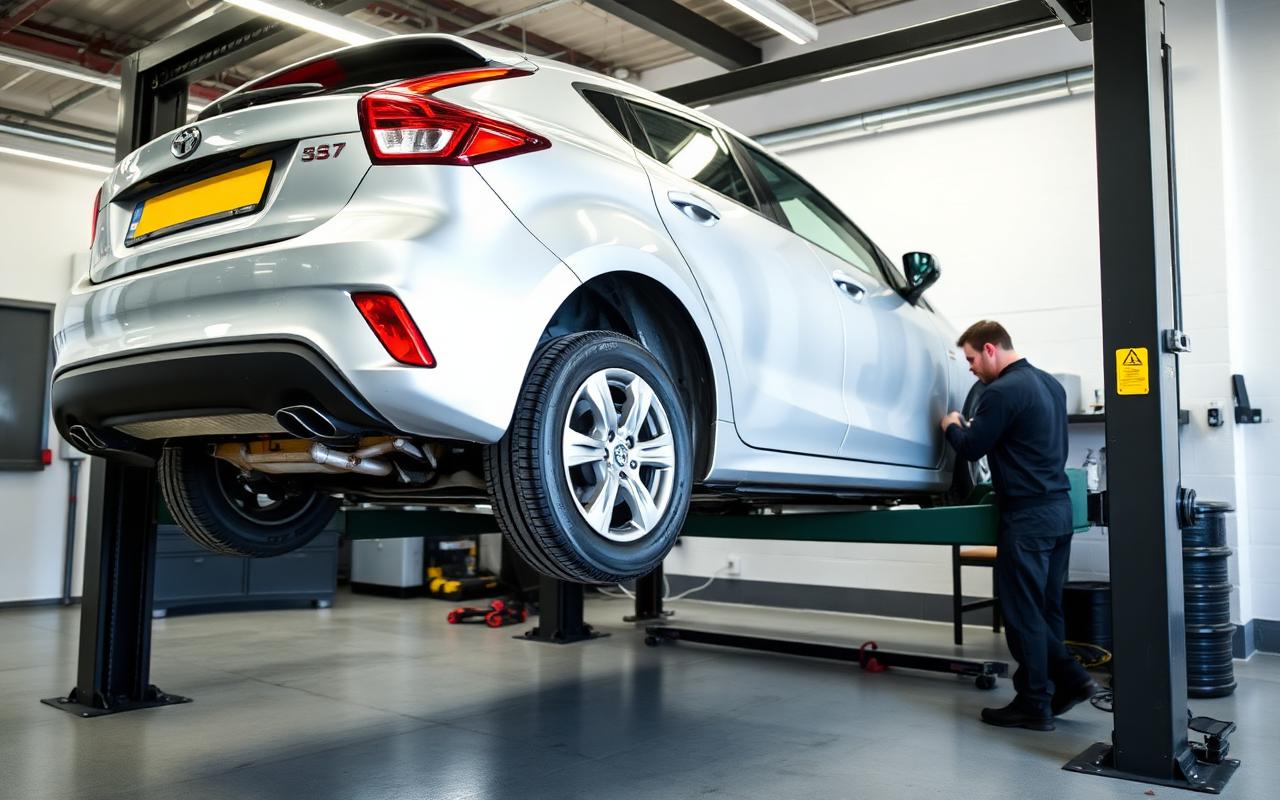
Technician inspecting a vehicle's suspension components on a ramp

About this service

The suspension and steering system is made up of several components working together to control how a vehicle rides, handles and stays in contact with the road. Dampers (often called shock absorbers) control the rate at which the suspension moves, and springs support the vehicle's weight and absorb bumps. Bushes are rubber or polyurethane mountings that allow controlled movement at joints while reducing noise and vibration. Control arms position the wheel and connect it to the vehicle's body, and ball joints allow the suspension to pivot as the wheel steers and moves up and down. Wheel bearings allow the wheel to rotate smoothly while supporting the vehicle's weight.

Each of these components can wear or fail independently, and the symptoms often overlap, which is why proper inspection matters rather than replacing parts based on a guess. A worn damper typically causes excessive body movement, a bouncing sensation after bumps, or a car that feels less settled at speed. Worn bushes commonly cause knocking or clunking noises, particularly over small bumps or during acceleration and braking, as the movement they are meant to control becomes looser than intended. A failing ball joint can cause a knocking noise and, in advanced cases, affects steering precision and is treated as a safety-critical concern since a joint separating entirely would be dangerous.

Wheel bearings that are worn typically cause a humming or roaring noise that changes with road speed and sometimes with steering input. This can also be felt as play when the wheel is checked by hand. Steering components include the steering rack, track rod ends and, on some vehicles, power steering pumps or electric power steering motors. These can cause looseness, knocking or heavier or lighter than normal steering effort when faulty.

Uneven tyre wear is frequently a symptom of a suspension or steering issue rather than simply a tyre problem. Wear concentrated on one edge, for example, can indicate incorrect wheel alignment, a worn suspension component, or both. A car that wanders or feels unstable in a straight line can result from worn dampers, incorrect tyre pressures, worn steering components, or misalignment. We investigate methodically rather than assuming a single cause.

When customers come to us

Knocking noise over bumps
This is commonly caused by worn bushes, ball joints or anti-roll bar links, and inspection under the vehicle usually identifies the specific source.
Car feels bouncy or unsettled at speed
This often points to worn dampers, which have lost their ability to control the rate of suspension movement properly.
Uneven tyre wear on one edge
This can indicate incorrect wheel alignment, a worn suspension component affecting wheel geometry, or both, and needs investigation rather than simply replacing the tyre.
Car wanders or pulls in a straight line
Possible causes include worn dampers, incorrect tyre pressures, worn steering components or misalignment, and we assess these systematically to find the actual cause.
Humming or roaring noise that changes with speed
This is a common symptom of a worn wheel bearing, which we confirm by checking for play and listening during a road test.
Steering feels loose or has excess play
This can indicate worn track rod ends, a worn steering rack, or occasionally a suspension component, and is investigated to identify the affected part precisely.

What the work includes

  • Damper and spring inspection and replacement
  • Bush, control arm and ball joint inspection and replacement
  • Wheel bearing inspection and replacement
  • Steering rack and track rod end inspection and replacement
  • Anti-roll bar link and bush inspection
  • Investigation of knocks, noise and vibration related to suspension and steering
  • Uneven tyre wear pattern assessment
  • Post-repair wheel alignment check where relevant

How it works

The 360 process for suspension & steering

  1. 01

    Describe the symptom

    We ask about noise, when it occurs, and any change in how the car feels to drive, which focuses the inspection before it begins.

  2. 02

    Physical inspection

    The vehicle is raised and suspension and steering components are physically checked for play, wear, corrosion and damage.

  3. 03

    Road test

    Where useful, a road test helps confirm noises or handling characteristics reported by the customer and narrow down the affected component.

  4. 04

    Findings explained

    We explain which component is affected, why, and whether it is safety-critical or something that can be scheduled.

  5. 05

    Repair carried out

    Agreed work is completed using components suited to the vehicle, with attention to correct torque and fitment given the safety-critical nature of these parts.

  6. 06

    Alignment check where relevant

    Where a repair could affect wheel geometry, we recommend and can carry out an alignment check to confirm the vehicle tracks correctly afterwards.

Capability

How suspension wear relates to tyre wear and handling

Suspension components are designed to hold each wheel at a specific position and angle relative to the road and the rest of the vehicle. As bushes, arms and ball joints wear, the wheel can move slightly outside its intended position under load. This changes the effective alignment even if no alignment adjustment has actually been made — this is why alignment and suspension condition are closely linked rather than separate issues.

Uneven tyre wear patterns can indicate specific problems. Wear concentrated on one edge of the tyre often points to incorrect camber (the inward or outward tilt of the wheel) or a worn suspension component affecting that angle. Wear across the whole tread but faster than expected can relate to worn dampers failing to keep the tyre in consistent contact with the road.

A vehicle that wanders or feels unstable in a straight line is not always a steering fault. Worn dampers reduce the suspension's ability to settle after a disturbance, which can feel similar to a steering issue from the driver's seat. Proper diagnosis therefore considers both systems together rather than assuming the cause based on the symptom description alone.

After replacing suspension components that determine wheel position — such as control arms, certain bushes or steering components — a wheel alignment check is recommended. This is because the geometry can change even with correctly fitted new parts. Leaving it unchecked risks uneven tyre wear developing again despite a correctly completed repair.

  • Worn suspension components can change effective wheel alignment without any alignment adjustment being made
  • Tyre wear location often points to a specific type of fault (camber vs damper vs pressure)
  • A straight-line wander can be a suspension issue, not only a steering one
  • Alignment should be checked after repairs affecting wheel position

Safety-critical suspension and steering components

Ball joints, control arms, steering rack components and wheel bearings are all safety-critical, since failure can affect the driver's ability to control the vehicle. Where inspection shows genuine wear or damage to these components, we recommend prompt repair rather than treating it as something to defer, and we will always explain clearly where this applies.

Why 360

Why customers choose us for this work

Proper inspection before parts are recommended
We physically check components for wear and play rather than replacing parts based on symptoms alone.
Alignment considered alongside suspension repairs
We recommend an alignment check where a repair could affect wheel geometry, to avoid uneven tyre wear returning after the repair.
All makes and models
We work on suspension and steering systems across a wide range of manufacturers.
Safety-critical components prioritised
Genuine wear to ball joints, steering components or bearings is always communicated clearly and promptly.

Reading facility

Loverock Road, Reading

  • 360 Garage
  • 360 Alloys

Garage, MOT, diagnostics, mechanical repairs, performance and alloy-wheel refurbishment.

119 Unit 4 Loverock Road, Reading, RG30 1DZ
0118 394 3000

Monday – Friday: 9:00am – 6:00pm

Saturday: By appointment only

Sunday: By appointment only

Questions

Suspension & Steering — frequently asked

360 Garage

Book a Suspension Check

MOTs, servicing, diagnostics, repairs and performance upgrades.

Add photos if they help us understand the work. This is optional.

We’ll use these details only to respond to your enquiry and manage any work you ask us to complete. View our Privacy Policy.