No two accidents are the same. But the sequence of good decisions in the first few minutes is broadly the same, whether it happens on a motorway hard shoulder, in a supermarket car park, or at a junction in town. This guide sets out that sequence as a plain checklist, in the order most people need it, so it can be followed under pressure without having to think too hard about what comes next.
The single most important point is a safety one. It is worth repeating at the start rather than leaving it buried in a list: if anyone is injured or in immediate danger, contact the emergency services first. Everything else on this page, including calling 360, can wait until people are safe. Vehicles, paperwork and insurance details are replaceable; the priority in the first moments is always people.
Once everyone is safe, the next challenge is usually uncertainty about what to say, what to record, and who to call first. It is common to feel pressure at the roadside, sometimes from the other driver, to agree who was at fault. It is best to avoid discussing blame at the scene at all. Simply exchange the required details and let the facts be assessed properly afterwards, by insurers or, where relevant, the police.
Evidence gathered in the minutes after an accident is often far more useful than evidence gathered later, because road markings, debris position, lighting conditions and witness memories can all change or fade. A small amount of care at the scene, taken safely, can make a claim considerably more straightforward weeks later.
When customers come to us
- Not knowing what to do first
- Shock and adrenaline make it hard to think clearly immediately after a collision. Having a fixed order of actions to follow removes the need to work it out under pressure.
- Uncertainty about admitting fault
- Drivers sometimes feel obliged to apologise or agree who caused the accident at the roadside. Liability is a legal and insurance matter that should be assessed properly, not decided in the moment.
- Forgetting to record key details
- Registration numbers, insurance details and contact information are easy to forget once everyone has driven away. A short written or photographed record at the scene avoids this problem.
- Not knowing whether the police need to be involved
- Some accidents legally require police notification, particularly where someone is injured or details cannot be exchanged. Knowing the general rule in advance avoids uncertainty at the scene.
- A vehicle that will not start or is unsafe to drive
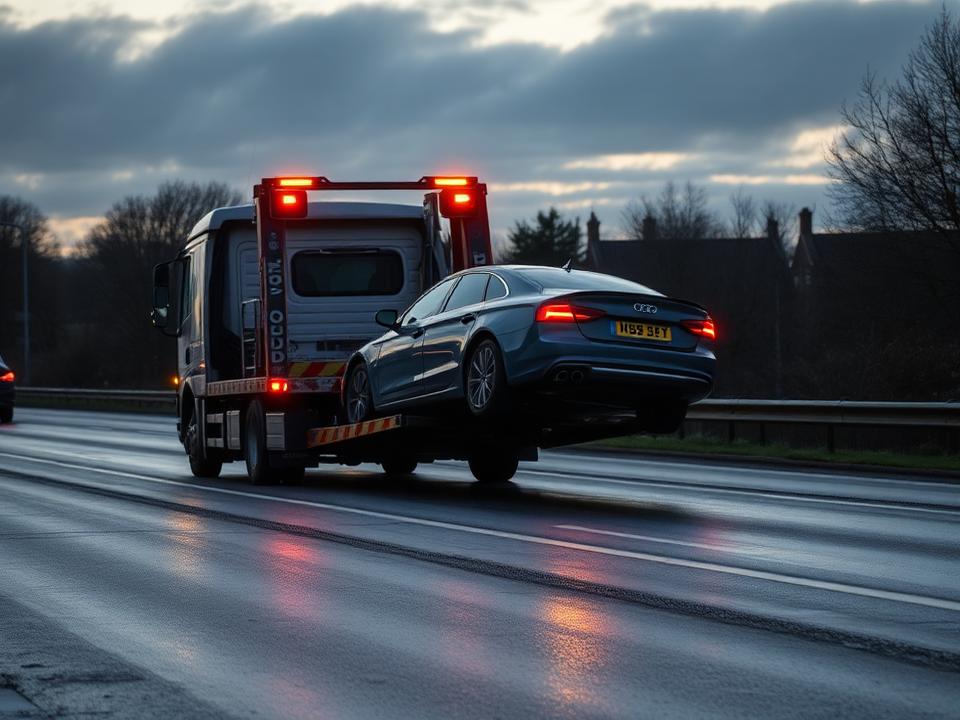
- Damage is not always obvious to the eye, and a vehicle that appears to run may still be unsafe. Arranging recovery rather than continuing a journey protects everyone in the vehicle.
- Not knowing who to call for recovery
- Searching for a local recovery provider while stranded at the roadside adds stress at the worst possible time. A single point of contact for recovery and next steps removes that burden.