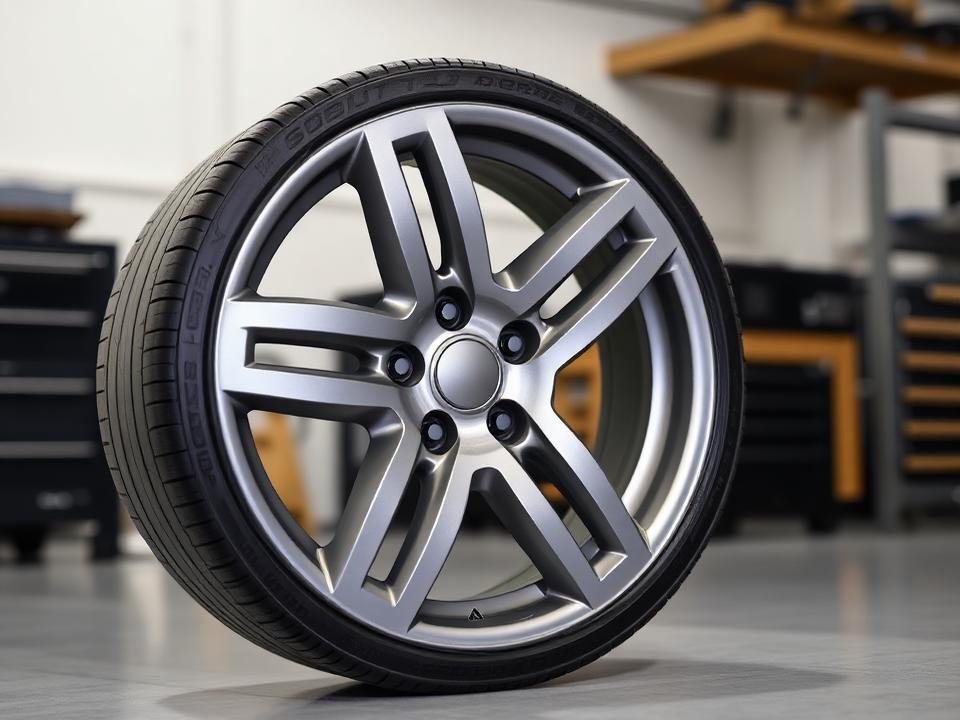
Corrosion needs a breach in the protective finish to begin — a stone chip, a scratch, a small area of lacquer that has started to lift with age. Once moisture reaches the bare alloy at that point, a corrosion reaction begins. The corrosion products that form can lift the surrounding, still-apparently-intact finish outward from the original breach point, spreading the visible damage over time.
This is why corrosion often looks far more contained from the outside than it actually is. The lacquer nearby may look fine, but if it has already been partially lifted by spreading corrosion underneath, it will fail in the near future regardless of how sound it currently looks. This is the core reason we strip the whole wheel rather than just cutting back the visibly affected patch.
Filiform corrosion — the white, thread-like or powdery pattern sometimes called white-worming — forms specifically under a coating. It spreads in a pattern of thin, branching trails, driven by moisture trapped between the coating and the metal. It is a recognisable sign that moisture has been present under the finish for some time.
Bead-seat corrosion is a special case because the consequence is functional rather than purely cosmetic — a compromised seal there causes slow air loss. Treating this area properly means restoring a clean, true surface for the tyre bead to seal against, not just cosmetically improving its appearance.
Recurrence risk is real and worth being upfront about. If a wheel's corrosion was driven by ongoing conditions — heavy winter salt exposure, harsh acidic wheel cleaners, or a coastal environment — those conditions do not go away once the wheel is repaired. Corrosion can begin again in the future. Choosing a more durable finish and adjusting cleaning habits both help reduce that risk, though we cannot promise corrosion will never recur.