360 Body Shop

Accident Repairs in Reading

Whatever the size of the impact, an accident-damaged car needs a proper assessment before anyone can say what it actually needs. Our Arkwright Road workshop handles everything from a single damaged panel to full structural repair, working through a clear, checked process from arrival to handover.

Technician assessing accident damage to a vehicle body panel in a workshop

About this service

Vehicle accidents rarely damage only what you can see. A knock to a bumper corner can push force back through the crash structure, disturb a headlamp mounting, or crack a sensor bracket that only becomes obvious once the bumper is off. That is why every accident repair we take on starts with a proper physical inspection rather than a guess from a photograph. We look at the visible damage, but we also look at what sits behind it, because a repair plan written from an incomplete picture usually needs rewriting halfway through the job.

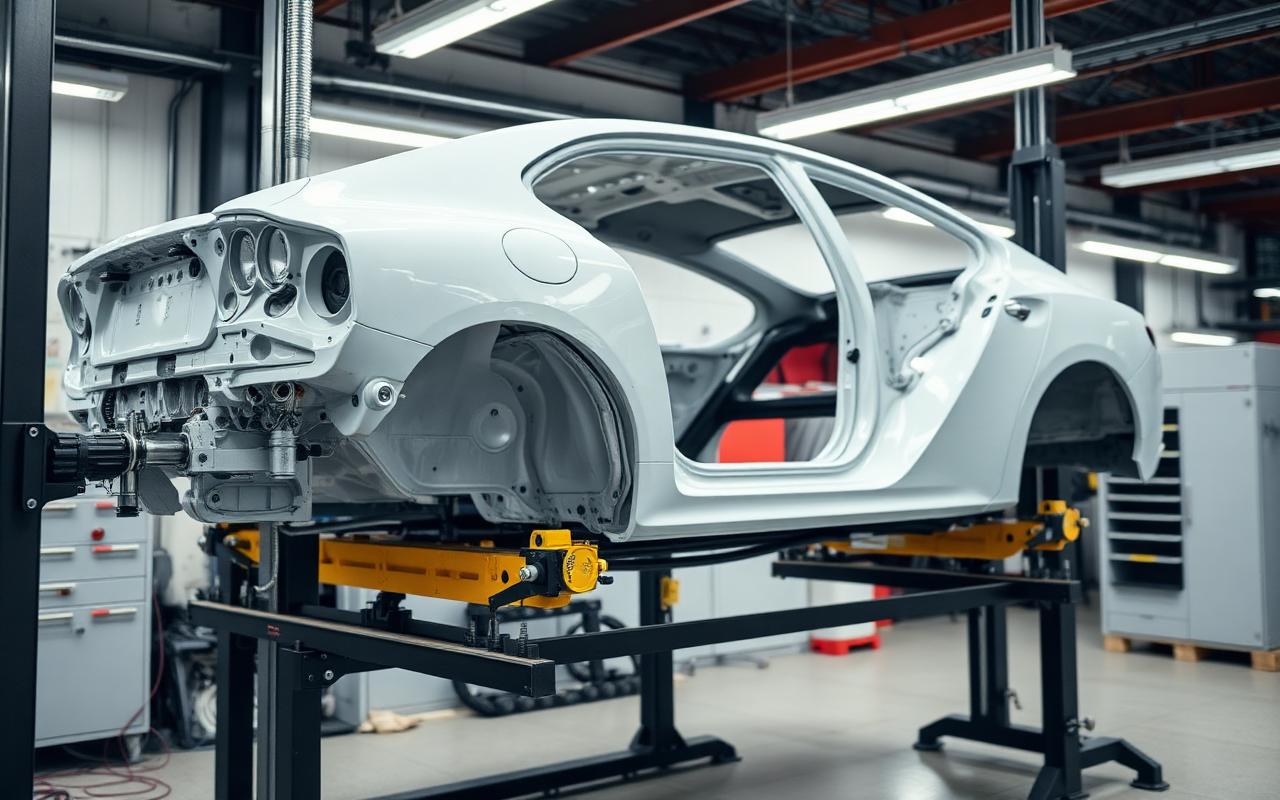
Once the car is in the workshop, we carry out an initial damage assessment and, where the damage suggests it, a partial disassembly so that hidden damage can be identified before any repair work begins. This might mean removing a bumper cover, a wheel arch liner, or trim panels to check the structure and running gear underneath. On vehicles where the impact may have affected the body's structural geometry, we use structural measuring equipment to check the car against its original specification points. This tells us whether panels have moved out of alignment in ways that are not visible to the eye.

From there we put together a repair plan covering everything the inspection has found: which panels can be repaired, which need to be replaced, and what parts are required. It also covers whether any mechanical components — suspension arms, subframes, radiators, or drivetrain mounts — have also been affected by the impact. Mechanical damage is common in anything beyond a light cosmetic knock, and we check it as part of the same process rather than treating bodywork and mechanics as separate jobs.

Modern cars carry a growing number of safety and driver-assistance systems, from airbags and seatbelt pre-tensioners to cameras and radar units that support features like automatic emergency braking and lane-keeping assistance. Where a repair involves a panel, sensor or bracket connected to one of these systems, ADAS recalibration is carried out as part of the repair. This means the system is checked and set to work correctly again, rather than simply being refitted and assumed to be fine.

When customers come to us

Visible panel and bumper damage
The obvious damage from a collision — a crumpled wing, a cracked bumper, a dented door — is usually only part of the picture, which is why we check behind it before quoting the repair.
Suspected hidden or structural damage
A harder impact can push a chassis rail or subframe out of alignment even when the paint looks intact. Structural measurement identifies this so it isn't missed.
Warning lights or system faults after an impact
Airbag warnings, ADAS faults or sensor errors following a collision usually mean a component has been disturbed or damaged and needs proper inspection, not just a reset.
Mechanical damage alongside bodywork
Radiators, suspension components and steering parts sit close to the outer panels and can be damaged in the same impact, particularly in front and rear-end collisions.
Uncertainty over repair versus write-off
Where damage is extensive, insurers assess whether repair is economical against the vehicle's value; we support that process with an accurate, itemised repair plan.
Cars that are not driveable
If the vehicle cannot be driven safely, recovery can be arranged rather than leaving you to organise transport for a damaged car yourself.
What the work includes

  • Initial damage assessment on arrival
  • Partial disassembly to check for hidden damage
  • Structural measurement against factory reference points
  • Written repair plan covering panels, parts and labour
  • Parts sourcing for the confirmed repair plan
  • Mechanical damage inspection and repair where required
  • Safety system checks, including airbags and seatbelt pre-tensioners
  • ADAS recalibration where a repair affects camera or radar-linked systems
  • In-house paint mixing and matching across three spray booths
  • Quality control checks before handover
  • Repairs for both private and insurance claims
  • Recovery arranged where the vehicle is not driveable
  • Courtesy car, subject to availability
  • Repair-progress updates throughout the job

How it works

The 360 process for accident repairs

  1. 01

    Initial assessment

    The car is inspected on arrival to record visible damage and identify areas that need closer investigation once the vehicle is on the ramp.

  2. 02

    Disassembly and hidden damage check

    Bumpers, liners and trim are removed as needed so the structure, mountings and running gear behind the damage can be properly inspected.

  3. 03

    Structural measurement

    Where the impact may have affected the body's geometry, measuring equipment checks the car against factory reference points to confirm alignment or identify movement.

  4. 04

    Repair plan and parts

    A written plan sets out what will be repaired, what will be replaced, and which parts are required, so the scope of work is agreed before it begins.

  5. 05

    Repair, paint and recalibration

    Panel and structural repairs are completed, paintwork is mixed and applied in the spray booth, and any affected ADAS systems are recalibrated.

  6. 06

    Quality control

    The completed repair is checked against the plan, including panel fit, paint finish and the operation of any systems that were recalibrated.

  7. 07

    Handover and updates

    You are updated on progress through the repair and briefed on the completed work at handover, including any warranty information.

Capability

Why hidden damage matters so much in accident repair

A car's body is engineered as a structure, not just a set of panels. Crumple zones are designed to absorb and redirect impact energy in a specific way, and once that structure has taken a hit, even one that looks cosmetic from outside, the geometry underneath can shift. Structural measuring equipment compares the car's current dimensions against its original factory reference points, picking up movement of a few millimetres that would be invisible on a visual check. This movement can still affect how the car handles, how doors and panels line up, and how it would perform in a future impact.

Deciding between repair and replacement for a damaged panel comes down to a few practical factors: how far the damage extends, and whether the panel is structural or purely cosmetic. It also depends on whether the metal has been stretched beyond safe repair limits, and whether a repair would ultimately cost more in labour than fitting a new part. We assess this panel by panel rather than applying a blanket approach to the whole car.

Driver-assistance systems rely on cameras and radar units being aimed with real precision — often within fractions of a degree. If a bumper, windscreen or wing carrying one of these components is removed, replaced or even significantly disturbed during a repair, the system needs to be recalibrated using appropriate equipment and targets. This is so it reads the road correctly again. Skipping this step can leave a system that appears to work but is misaligned, which is not something a driver can safely judge by eye.

What affects the overall cost of an accident repair includes the number of panels involved and whether parts need to be sourced specifically for the vehicle. It also depends on how much labour time is needed to access and repair the damage. Finally, it depends on whether structural correction or recalibration is required, and how much of the car needs to be stripped and rebuilt. None of this can be estimated accurately without physically assessing the vehicle first.

  • Structural measurement against factory reference points
  • Panel-by-panel repair or replace decisions
  • ADAS recalibration for camera and radar-linked systems
  • In-house paint mixing across three spray booths

Being honest about the limits of repair

Not every impact is repairable in a way that safely restores the vehicle. Where structural damage is beyond safe repair limits, or where the cost of a full and proper repair does not make sense against the vehicle's value, we say so rather than carrying out partial work. Any assessment we give is based on physical inspection; we do not provide a definitive diagnosis from photographs alone.

Why 360

Why customers choose us for this work

Full assessment before any work begins
We check for hidden and structural damage before writing a repair plan, so you are not faced with surprises halfway through the job.
In-house structural and paint capability
Structural measurement, three spray booths and in-house paint mixing mean the repair stays under one roof rather than being passed between subcontractors.
ADAS recalibration included where needed
Camera and radar-linked systems affected by the repair are recalibrated as part of the job, not left as an afterthought.
BS 10125-certified repairs
BS 10125-certified repairs completed using recognised manufacturer repair methods, applied consistently across private and insurance work.

Reading facility

Arkwright Road, Reading

  • 360 Body Shop
  • 360 Accident Management

Body repair, paint, structural repair and nationwide accident management support.

8 Arkwright Road, Reading, Berkshire, RG2 0LU
0118 391 3727

Monday – Friday: 9:00am – 6:00pm

Saturday: By appointment only

Sunday: By appointment only

Questions

Accident Repairs — frequently asked

360 Body Shop

Get a Free Estimate

Cosmetic, structural and insurance-quality vehicle repairs.

Add photos if they help us understand the work. This is optional.

We’ll use these details only to respond to your enquiry and manage any work you ask us to complete. View our Privacy Policy.