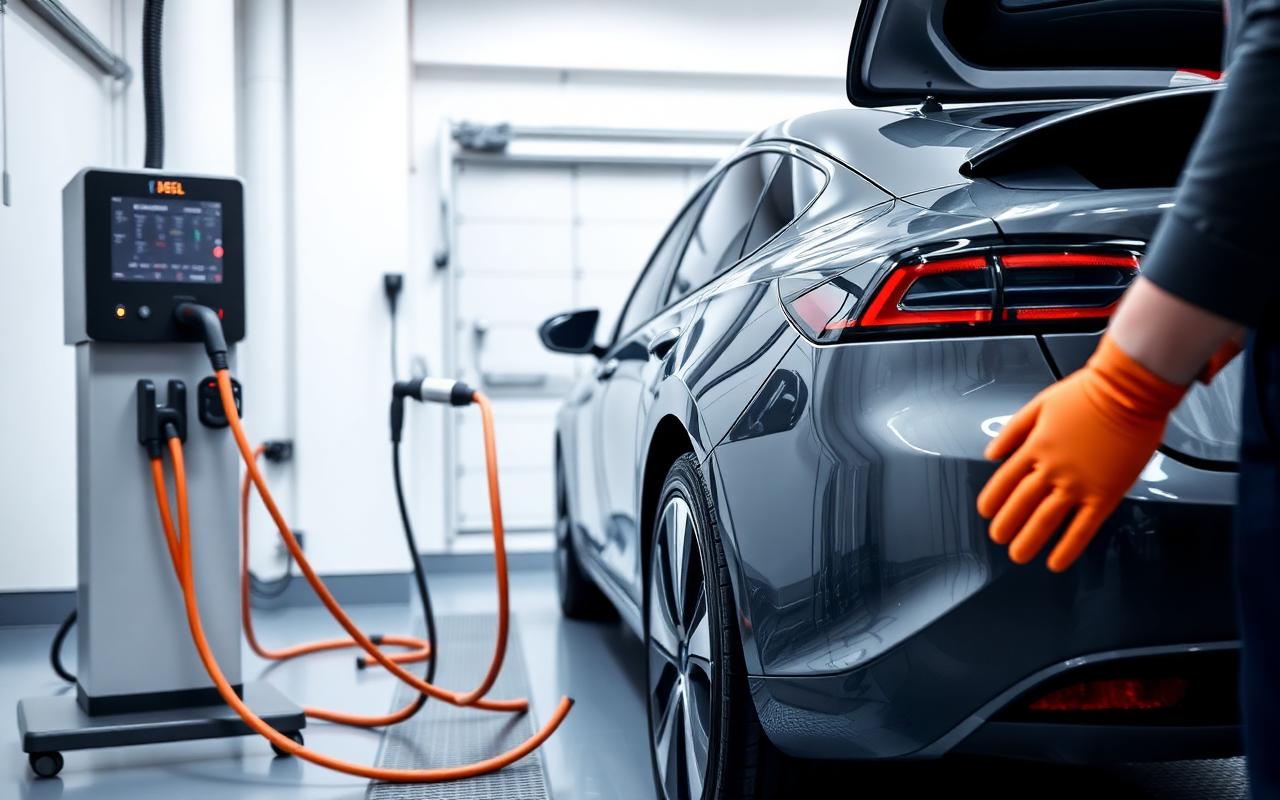
Electric and hybrid vehicles are often assumed to need little or no maintenance because they have fewer moving parts than a conventional combustion engine, but this is only partly true. The high-voltage battery and drive system genuinely do require less routine intervention than an engine and gearbox. But every other system on the car — brakes, suspension, tyres, cooling, the 12V electrical system and the cabin — still wears, still needs inspection, and still benefits from proactive maintenance in exactly the way a conventional car does.
Working on high-voltage systems safely requires specific training and equipment, because the voltages involved in EV and hybrid drive systems are genuinely dangerous if approached without the correct procedure. Our technicians working on high-voltage components hold the appropriate qualifications for isolating and working around these systems safely, following manufacturer-specified lock-out procedures before any work near the battery, inverter or high-voltage wiring is carried out.
Regenerative braking, which recovers energy under deceleration and feeds it back into the battery, changes the wear pattern on the friction brakes compared with a conventional car. Because the electric motor handles much of the everyday braking, the friction brake pads and discs are used less often. This sounds like an advantage, but it can create its own issue: brakes that are used infrequently are more prone to corrosion and surface rust building up on the discs. This is particularly true on vehicles that sit for periods or are used mostly in stop-start conditions where regenerative braking dominates. We check for this specifically during servicing, since a light film of rust and reduced pad usage are not always obvious from the driver's seat.
The 12V system remains present on every electric and hybrid vehicle, powering everything from the infotainment system to the systems that manage the high-voltage battery itself. A flat or failing 12V battery is one of the most common reasons an EV will not start, even with a fully charged main battery. Checking 12V battery health and charging behaviour is a standard part of our servicing for these vehicles.
When customers come to us
- Reduced range compared with when new
- A gradual reduction in usable range over time can be normal battery ageing, but should be assessed to rule out a specific fault rather than assumed.
- 12V battery repeatedly going flat
- A weak or failing 12V battery is a common and often overlooked cause of an EV or hybrid failing to start, separate from the high-voltage system entirely.
- Warning lights relating to the hybrid or EV system
- Warning lights specific to the drive system require proper diagnosis by technicians trained to work safely around high-voltage components, rather than guesswork.
- Corroded or seized brakes from infrequent use
- Because regenerative braking reduces friction brake use, discs can develop surface corrosion that needs identifying and addressing during routine servicing.
- Unusual noise from the drive motor or reduction gear
- Whining or grinding noise from the electric motor or single-speed reduction gear should be assessed, since these components, while simpler than a conventional gearbox, are not maintenance-free.
- Charging issues or slower-than-expected charging
- Charging performance can be affected by battery condition, onboard charger faults, or the charging equipment itself, and needs assessment to identify which.