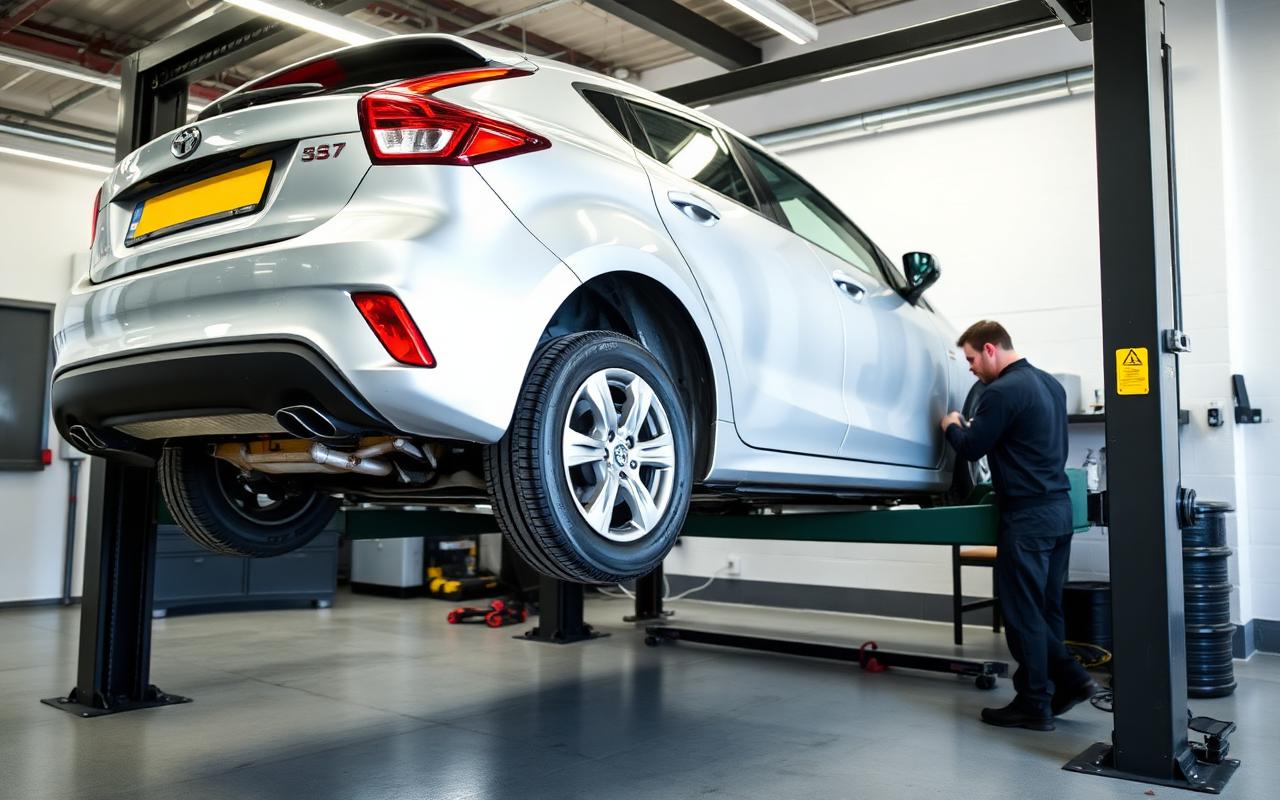
The MOT test exists to check that a vehicle meets a minimum legal standard of roadworthiness and emissions compliance on the day it is tested. It covers a defined list of items set out under the government's MOT testing manual — including lights, tyres, brakes, steering, suspension, seatbelts, structure, exhaust emissions and a number of other checks. It is not a full assessment of the vehicle's overall condition, and it is not a guarantee that nothing will go wrong afterwards. It also does not replace servicing: many wear items that affect long-term reliability, such as oil condition or brake fluid age, fall outside what an MOT examines.
Every item checked during the test results in one of several outcomes. A clean pass means no faults were found. An advisory notes something that is not yet a legal failure but is worth monitoring or addressing before the next test — for example, a tyre approaching the legal tread limit. A minor fault does not cause a failure but should be repaired as soon as reasonably possible. A major fault or a dangerous fault causes the vehicle to fail the test. A dangerous classification means the vehicle should not be driven at all until it is repaired, since it poses a direct and immediate risk.
As we test on site, there is no need to book a separate visit at a different garage for the test itself. Any work identified during a pre-MOT inspection or the test itself can often be discussed and arranged the same day, subject to parts availability and the extent of any work needed. A pre-MOT inspection ahead of the actual test can identify likely failure points in advance, giving the opportunity to address them before the formal test result is recorded. This matters because a recorded failure remains on the vehicle's MOT history even once repaired.
If a vehicle fails, retest rules depend on how quickly the repair is carried out and whether the vehicle leaves the test centre. A full retest is required if the vehicle is presented again after leaving. Where repairs are carried out on-site the same day and the vehicle has not left the premises, a partial retest limited to the failed items may apply. This is subject to the rules in place at the time and the tester's judgement.
When customers come to us
- MOT due soon and unsure if the car will pass
- A pre-MOT inspection identifies likely failure points in advance, giving time to address them before the formal test result is recorded on the vehicle's history.
- Vehicle has failed its MOT elsewhere
- We can review the failure items, quote for the necessary repairs and carry out a fresh test once the work is complete.
- Warning light on alongside MOT due date
- A warning light does not automatically fail an MOT depending on what it relates to, but some illuminated warning lights are a testable item, so it is worth having this looked at before the test.
- Unclear on what an advisory actually means
- An advisory is not a failure, but it flags something worth monitoring or repairing before it becomes one — we explain what each advisory means in plain terms and what to watch for.
- Tyre tread or condition close to the legal limit
- Legal tread depth and tyre condition are commonly tested items, and we can advise on remaining tread life ahead of a test date.
- Windscreen chip or crack near the driver's eyeline
- Damage within specific zones of the windscreen can cause an MOT failure, and this is worth checking before the test.